

Over-the-phone interpreting is usually cheaper for short, urgent, or unpredictable conversations because it is billed by the minute and does not require travel, mileage, parking, or a half-day minimum. In-person interpreting costs more because the interpreter reserves physical time, travels to the site, and may need preparation, credentials, or equipment.
In this article, we explore how much does over the phone interpreting cost compared to in person, what affects the price, and when phone, video, ASL, or on-site support makes the most financial sense.
For many organizations, the smart choice is not simply “phone is cheaper” or “in person is better.” The real answer depends on the risk, length, language, setting, and the people involved.
How Much Does Over the Phone Interpreting Cost Compared to In Person?
So, how much does over the phone interpreting cost compared to in person? In most U.S. business, legal, school, healthcare-adjacent, public-sector, and customer-service settings, over-the-phone interpreting often costs about $1.25 to $4.00 per minute. In-person interpreting often ranges from about $45 to $150 per hour, with two-hour, half-day, or full-day minimums.
That means a ten-minute phone call may cost less than lunch. An on-site assignment, on the other hand, can cost several hundred dollars before the first word is interpreted. Budget is only half the decision, so we also published a walkthrough on choosing between phone and on-site interpreting based on the setting, the stakes, and how long the conversation runs.
For most organizations, over-the-phone interpreting is the more cost-effective choice for short or urgent conversations, while in-person interpreting is better for high-stakes legal, medical, education, public-sector, ASL, or group settings. CCI Group supports both models, along with video remote interpreting and accessibility services, which helps organizations choose the right level of language support instead of overpaying for the wrong format.
Here’s the thing: the cheapest rate is not always the best value. A quick benefits call, intake conversation, customer service issue, scheduling matter, or account update often fits phone interpretation perfectly. A court hearing, trauma-sensitive interview, public meeting, IEP session, medical consent conversation, emergency briefing, or high-stakes negotiation may call for an in-person interpreter because tone, body language, side conversations, documents, and room dynamics matter.
The American Translators Association explains the distinction clearly: “Interpreters work with the spoken word, converting speech from a source language into a target language. This is far more than speaking two languages fluently.” That matters because interpreting cost is not just about minutes. It reflects skill, concentration, ethics, subject matter, language pair, and risk.
For organizations comparing interpretation services, CCI Group’s professional interpreting services cover over-the-phone interpreting, on-site interpreting, video remote interpreting, and remote simultaneous options for legal, government, education, enterprise, and emergency communication needs.
Telephone Interpreter Rates vs On-Site Interpreting Fees
Over the phone interpreter rates are usually charged per minute. In-person interpreting rates are usually charged per hour, half day, or full day. That one billing difference changes the entire budget.
| Service Type | Common Pricing Model | Typical 2026 Market Range | Best Fit |
| Over-the-phone interpreting (OPI) | Per minute | $1.25–$4.00 per minute | Short calls, urgent needs, intake, customer service, public benefits, quick legal or financial questions |
| Video remote interpreting (VRI) | Per minute or session | $1.95–$4.95 per minute | Telehealth, virtual meetings, visual context, ASL, remote interviews |
| In-person consecutive interpreting | Hourly with minimum | $45–$150+ per hour | Court, medical, school, HR, community meetings, sensitive conversations |
| Simultaneous interpreting | Hourly, half-day, or day rate | $130–$200+ per hour or $700–$1,200+ per day | Conferences, large meetings, multilingual events |
| ASL interpreting | Hourly with minimum | Often $75–$150+ per hour, depending on setting and region | Deaf and Hard-of-Hearing access, ADA-related communication, public meetings |
A provider may quote lower or higher than these ranges based on language, demand, certification, subject matter, schedule, call volume, and contract terms. Spanish translators and Spanish interpreters are often easier to schedule than interpreters for rarer languages, so Spanish telephone interpreting rate per minute can be lower than a rare language pair. A Vietnamese interpreter may cost more or less depending on location, availability, and whether the job needs medical, legal, or community interpreting experience.
The question of how much does over the phone interpreting cost compared to in person becomes easier once you add minimums. A $2.00-per-minute phone call that lasts 12 minutes costs $24. An in-person interpreter at $90 per hour with a two-hour minimum costs $180 before travel. In that case, phone interpretation is the clear cost-effective option.
But here’s the problem. If the conversation lasts two hours and involves legal risk, multiple speakers, exhibits, emotional testimony, or technical terminology, phone interpretation may slow the meeting down. At that point, the cheaper minute rate can start to feel clunky.
Over the Phone Interpretation Rates in Real Budgets
Phone interpretation services cost less mainly because they remove idle time. You do not pay an interpreter to drive, park, wait in reception, sit through delays, or hold half a day open for a short appointment. You pay for the call time, usually rounded according to the provider’s billing rules.
| Scenario | OPI Cost Estimate | In-Person Cost Estimate | Better Value |
| Five-minute customer service call at $2.00/min | $10 | $150–$300 with minimum | OPI |
| Fifteen-minute benefits intake at $2.50/min | $37.50 | $150–$300 with minimum | OPI |
| One-hour attorney-client prep call at $3.00/min | $180 | $180–$350 with minimum/travel | Depends on sensitivity |
| Two-hour school IEP meeting | $240–$480 if billed by minute | $200–$500+ | Often in-person or video |
| Full-day conference | Not ideal by phone | $700–$1,200+ per interpreter, plus equipment | In-person or remote simultaneous |
This is why over the phone interpretation rates work well for organizations with unpredictable language needs. A city office, clinic, call center, law firm, bank, insurance carrier, school district, or nonprofit may not know which language will come up next. Phone access gives staff a practical way to reach interpreters in multiple languages without hiring full-time language staff for each one.
CCI Group’s model is built for that kind of mission-critical communication: fast access when the conversation is short, deeper support when the situation calls for on-site or video interpreting, and multilingual coverage for organizations that cannot afford delays or guesswork.
Interpreter Cost Factors That Change the Price
The biggest factor is not always the language. It is the setting. A general customer support call does not require the same preparation as a deposition, emergency response briefing, immigration interview, financial fraud inquiry, or mental health appointment. Legal and medical conversations carry higher stakes, so agencies may assign interpreters with specific credentials or sector experience.
Language demand comes next. Common languages such as Spanish may have broader interpreter availability. Less common language pairs can require more scheduling effort. Dialect also matters. “Arabic” on its own may not be enough. A provider may need to know whether the speaker uses Egyptian Arabic, Levantine Arabic, Gulf Arabic, Iraqi Arabic, or another variety. The same idea applies across many language groups.
This is where 350+ language access becomes more than a marketing number. For public agencies, school systems, courts, healthcare-adjacent teams, and companies with international business, the real value is knowing that support is available beyond the most common languages.
Timing can change the quote too. A scheduled weekday call may cost less than a midnight emergency call. The rate may also rise for rush requests, holidays, after-hours work, recorded proceedings, or sessions that need preparation. If a provider offers volume pricing, larger clients may pay lower telephone interpreting rates than one-time users.
Technology and security also matter. A basic three-way phone call is usually cheaper than a secure integrated platform with recordings, analytics, encrypted access, language routing, and compliance reporting. For legal, education, finance, public-sector, and government work, those details are not decoration. They protect the organization.
Interpretation Services Cost by Use Case
Not every buyer should compare rates the same way. The right choice depends on what failure would cost. A poor interpretation in a simple scheduling call is annoying. A poor interpretation in a consent discussion, court matter, workplace investigation, school meeting, or emergency service call can be serious.
For government, legal, education, healthcare-adjacent, financial, and nonprofit teams, CCI Group’s industry language solutions show how interpretation needs shift by sector. A public agency may care about Title VI language access. A school may need parent engagement and FERPA-aware support. A law firm may need confidentiality and legal vocabulary. A company with international business may need scalable phone interpretation for sales, compliance, and customer support.
| Use Case | Recommended Mode | Why It Works |
| Front-desk intake | Over-the-phone interpreting | Fast, low-cost, easy to access |
| Customer support | Over-the-phone interpreting | Good for short, repeat conversations |
| Telehealth check-in | Phone or video remote interpreting | Phone works for simple needs; video helps with visual cues |
| Court hearing | In-person or video remote | Accuracy, credentials, and process control matter |
| Deposition | In-person, video, or scheduled phone | Depends on jurisdiction, record, and complexity |
| IEP meeting | In-person or video | Visual trust and careful turn-taking help families participate |
| Conference | Simultaneous interpreting | Large audience, real-time delivery, often equipment support |
| ASL access | In-person or video remote | Visual language requires sight, not audio |
This is where video remote interpreting cost enters the decision. VRI may cost more than phone interpretation but less than full on-site support. It can be a good middle ground when visual cues matter, but travel would waste money.
For ASL, video is often essential because sign language is visual. That is why the cost of an ASL interpreter, asl interpreter cost per hour, and sign language interpreter cost per hour should not be compared directly with audio-only telephone interpreter rates.
For Deaf and Hard-of-Hearing access, CCI Group provides sign language and accessibility services that include ASL, VRI, CART, captioning, and Section 508-related support.
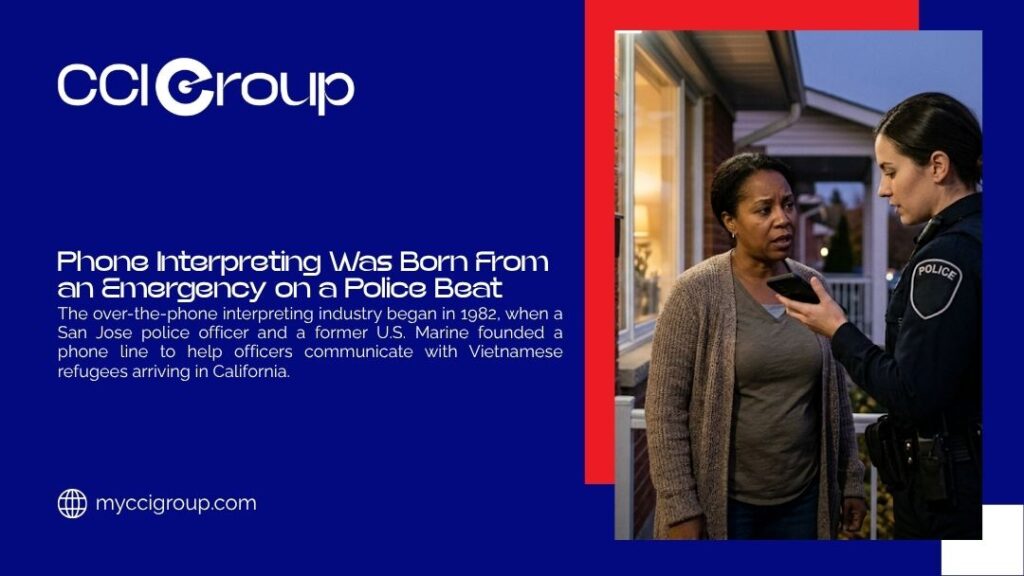
Who Pays for Interpreter Services?
Who pays for interpreter services depends on the setting. In ordinary business situations, the organization that needs the conversation usually pays. A company pays to serve customers. A law firm pays to support a matter. A school district or agency may pay as part of its language access obligations.
Healthcare and federally funded programs have stricter rules. The U.S. Department of Health and Human Services states that language assistance services for people with limited English proficiency must be free of charge in covered settings. HHS also says such services must be accurate, timely, and protect privacy and independent decision-making, according to its Section 1557 language access guidance.
That point matters for cost planning. If your organization is covered by federal language access rules, the question is not only how much does over the phone interpreting cost compared to in person. The better question is how to provide timely, qualified language access without wasting budget.
The HHS National CLAS Standards also call for language assistance at no cost to people with limited English proficiency or other communication needs. For organizations with public-facing responsibilities, that makes interpreter access a service issue, a compliance issue, and a trust issue at the same time.
How Much Does an Interpreter Cost Per Hour?
The U.S. Bureau of Labor Statistics reports that interpreters and translators had a 2024 median pay of $59,440 per year, or $28.58 per hour, in its Occupational Outlook Handbook for interpreters and translators.
That wage data is useful, but buyer pricing is different from worker pay. When an organization buys interpretation services, the rate may include recruiting, testing, scheduling, compliance, insurance, technology, quality control, account support, after-hours access, and administrative overhead. That is why interpretation services rates are higher than the interpreter’s hourly wage.
So, how much does an interpreter cost? For basic in-person consecutive work, many buyers see quotes in the $45 to $150 per hour range. For legal, medical, conference, or technical work, the rate can climb. Simultaneous interpretation rates per hour can run higher because the work is mentally demanding and may require two interpreters, equipment, pre-event preparation, and technician support.
Phone Translation Services Cost vs Interpretation Cost
People often search for phone translation services cost, but the correct term is usually phone interpretation. Translation deals with written content. Interpretation deals with spoken or signed communication. If you need a birth certificate, contract, transcript, policy, or legal document converted into another language, that is translation. If you need someone to help two people speak in real time, that is interpreting.
That distinction affects price. Cost for translation services per hour is not the same as telephone interpreter rates. Translation may be priced per word, per page, per project, or per hour. Interpreting is usually priced by the minute, hour, half day, or day.
If your project includes both spoken and written language support, CCI Group also provides certified and professional translation services for legal files, business materials, immigration documents, public notices, and multilingual communication.
When Over-the-Phone Interpreting Saves Money
Over-the-phone interpreting saves money when the conversation is short, immediate, and mostly verbal. It works well when the parties do not need to study documents together, read body language, inspect visual evidence, or manage a large room. It also helps when staff may need one of many languages at random.
A city agency may receive one call in Spanish, the next in Haitian Creole, and the next in Vietnamese. A clinic may need support for a patient intake today and a billing question tomorrow. A company may need quick support for international business calls across time zones. In those cases, keeping an in-person interpreter on standby would be wasteful.
That is why the exact phrase How much does over the phone interpreting cost compared to in person has a practical answer: phone usually wins for short conversations, while in-person wins when the meeting needs depth, trust, presence, or visual control.
When an In Person Interpreter Is Worth the Higher Cost
An in person interpreter is worth the higher cost when the setting is sensitive, formal, emotional, visual, or legally risky. The interpreter can read the room, catch confusion early, manage turn-taking, and notice nonverbal cues. That can prevent misunderstandings that would cost far more than the rate difference.
In-person support is often the better fit for court proceedings, depositions, community meetings, public hearings, school IEP sessions, high-stakes HR meetings, complex medical conversations, and executive negotiations. It is also better when a speaker may use gestures, point to exhibits, refer to forms, or rely on visual context.
But it is not always needed. Paying a two-hour minimum for a seven-minute routine call is like hiring a moving truck to carry one box. It will work, sure, but it is not the smartest spend.
How to Choose Between OPI, VRI, ASL, and On-Site Support
The best pricing decision starts with the conversation, not the rate card. Ask what must happen during the interaction. Is it urgent? Is it private? Is it legally sensitive? Does the interpreter need to see the speaker? Are documents involved? Will the session last five minutes or three hours? Will the same language come up often?
If the answer is short, urgent, and audio-only, OPI probably fits. If the answer includes visual cues, ASL, telehealth, or remote meetings, video may fit better. If the answer includes legal risk, emotional weight, large groups, or complex discussion, in-person may be worth it.
For organizations that need a mix of options, the best plan often combines phone interpretation for daily needs, video remote interpreting for visual access, and on-site interpreting for complex events. That gives staff flexibility without forcing every request into the most expensive channel.
This blended approach also fits CCI Group’s broader language access model: use phone support when speed matters, video when visual access matters, on-site interpreters when presence matters, and accessibility services when equal participation is the priority.
A Practical Cost Formula for Buyers
Use this simple formula before you book:
Over-the-Phone Interpreting (OPI) Formula: Estimated OPI cost = expected minutes ✕ the telephone interpreting rate per minute.
Estimated in-person cost = (hourly rate ✕ the minimum booking time) + travel, parking, mileage, prep time, equipment, or after-hours fees (incidental fees).
For example, a 20-minute OPI call at $2.50 per minute costs $50. An in-person interpreter at $90 per hour with a two-hour minimum costs $180, and travel may push the total higher. In that case, OPI costs about 72% less.
Now change the scenario. A three-hour legal meeting at $2.50 per minute costs $450 by phone. An in-person interpreter at $100 per hour for three hours costs $300 before travel. If the legal setting benefits from body language and document review, in-person may be both better and cheaper.
That is why how much does over the phone interpreting cost compared to in person cannot be answered by rate alone. Duration changes everything.
Buyer Mistakes That Raise Interpretation Cost
The first mistake is choosing only by price. A low telephone interpreter rate per minute may look good, but if connection times are slow, calls drop, interpreters lack subject-matter knowledge, or billing has hidden minimums, the real cost rises.
The second mistake is using bilingual staff instead of trained interpreters for high-stakes conversations. Bilingual ability is valuable, but it is not the same as professional interpreting. Interpreters must preserve meaning, tone, register, confidentiality, and impartiality.
The third mistake is confusing translation and interpreting. If a provider quotes “translation services cost per hour” when the need is live speech, the scope is already muddy. Clean scope leads to clean pricing.
The fourth mistake is treating ASL like spoken-language OPI. ASL requires visual access, and many situations call for certified sign language professionals. The cost of sign language interpreter services may be higher than audio-only support, but the legal and human access value is different too.
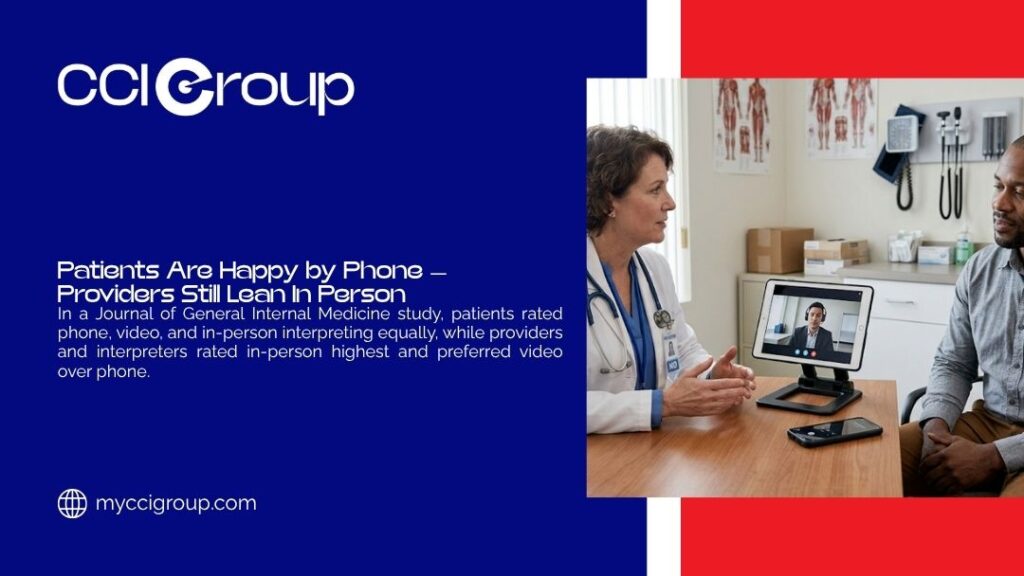
What a Fair Quote Should Include
A fair quote should spell out the language, dialect if relevant, service mode, minimum time, billing increment, cancellation window, travel fees, after-hours fees, recording rules, confidentiality terms, certification level, and whether the interpreter has industry experience. If you are formalizing the process rather than gathering one-off quotes, this checklist of what an interpreter services RFP should include covers the same line items in a format vendors can bid against.
For phone interpretation, ask whether there are setup fees, monthly minimums, connection fees, rounding rules, volume discounts, and itemized invoices. For in-person work, ask about travel, parking, mileage, prep time, cancellation terms, and whether a two-hour, half-day, or full-day minimum applies. Agencies buying under a public contract should also work through our checklist for government language services contracts, which covers set-aside status, security requirements, and past performance alongside pricing. Beyond pricing, the contract itself should commit the vendor to measurable performance standards, so review the service level agreements your interpreting contract should include before you sign anything. Pricing transparency is only one piece of the picture, so it helps to know how to evaluate a language services vendor before signing a contract and what else belongs on your due diligence list.
For public agencies, schools, courts, healthcare providers, and enterprise teams, the provider should also understand procurement and compliance. CCI Group’s Sourcewell contract access gives eligible public-sector buyers a cooperative purchasing route for translation, interpretation, and language access services. That can shorten the path from “we need support” to “we can start.”
For buyers that require federal-style vendor readiness, CCI Group’s public-sector positioning, government language access experience, and GSA-style procurement value can reduce friction during vendor review, especially when language support is tied to compliance, accessibility, or emergency communication.
So, Which One Costs Less?
In plain English, over-the-phone interpreting usually costs less for short calls. In-person interpreting often costs more upfront because it carries minimums and travel, but it can be the better value for longer, complex, or sensitive sessions.
So, how much does over the phone interpreting cost compared to in person? A short OPI call may cost $10 to $75. A typical in-person assignment may start around $150 to $300 because of minimums, even if the actual conversation is brief. For longer sessions, the gap narrows. For conferences, legal matters, ASL access, or public meetings, the right choice depends less on price and more on accuracy, access, and risk.
If your organization needs fast access to interpreters without paying for unnecessary on-site time, OPI can help control interpretation cost. If the setting needs trust, body language, legal precision, accessibility, or formal presence, in-person or video remote support may be worth the spend.
And that is why this decision matters. The right interpreting model protects the conversation, the budget, and the people who depend on accurate communication.
Need help choosing the right interpreting model? Start with CCI Group’s language access consultation team. They can help compare over-the-phone, video remote, ASL, and on-site interpreting options based on your language needs, setting, urgency, and budget before you commit to the wrong service level.