

A vague RFP attracts vague bids. When the request doesn’t spell out what you need, you get proposals that are hard to compare, priced on different assumptions, and submitted by vendors who may not cover your languages or settings. A precise RFP does the opposite: it surfaces qualified language partners and comparable pricing you can actually score. Here are the components every interpreter services RFP should contain, including the details most buyers leave out.
Start With Scope, Define What You Actually Need
Before you ask vendors anything, tell them what you’re buying. The single biggest reason bids come back mismatched is that the RFP never pinned down the service modalities the organization requires.
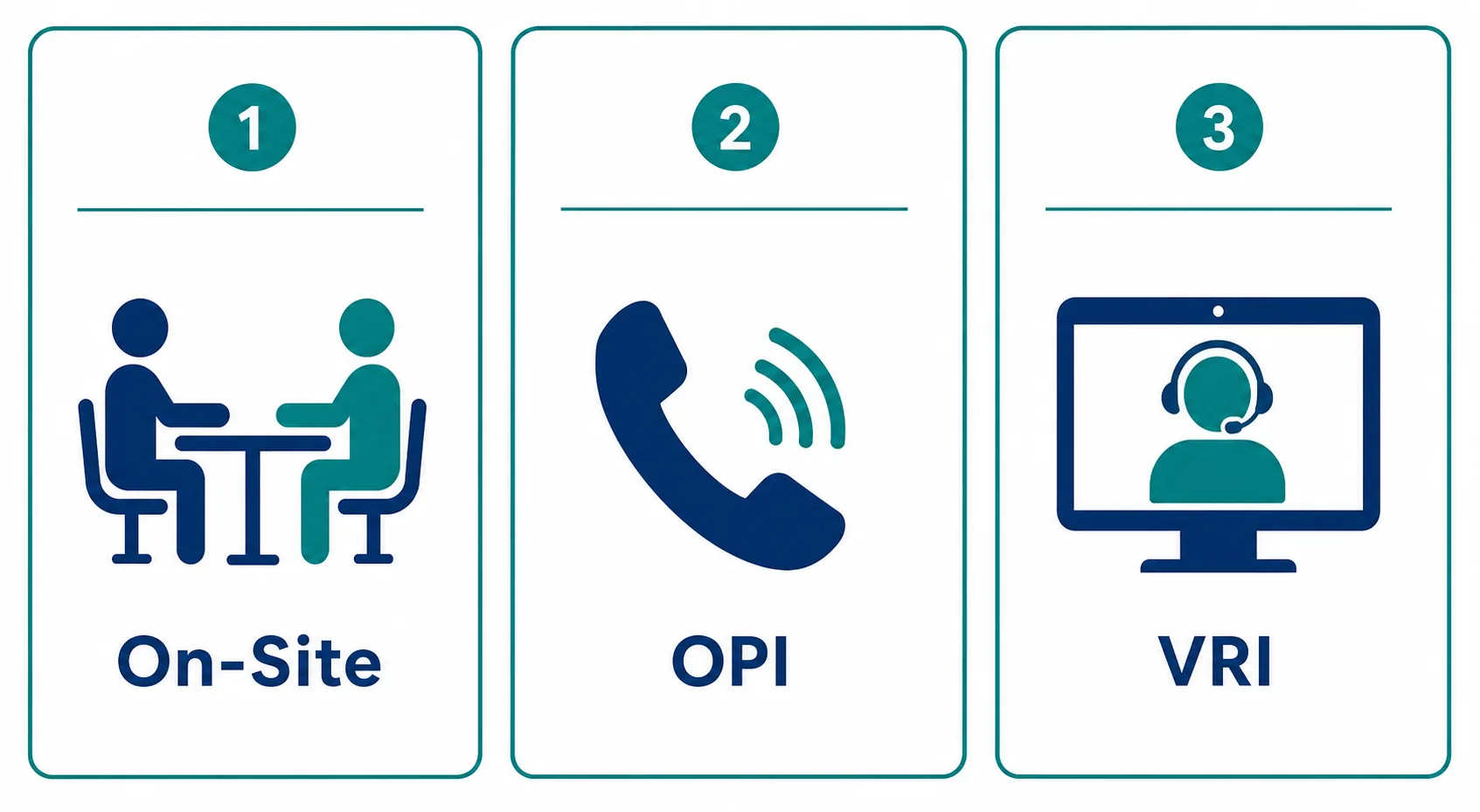
Name the service modalities explicitly
Spell out each delivery method so there’s no ambiguity:
- On-site (in-person) interpretation, an interpreter physically present for appointments, hearings, or meetings.
- Over-the-phone interpretation (OPI), audio-only interpreting delivered by phone, usually on demand, with a remote interpreter connected in seconds by call.
- Video remote interpreting (VRI), interpreting over a video connection, which adds visual context and is essential for sign language.
State which of these you need, and whether you expect all three from a single vendor.
Estimate volume, settings, and use cases
Give vendors the numbers they need to price accurately: estimated monthly call or appointment volume, your primary settings (medical, legal, educational, social services), and whether demand is scheduled, on-demand, or both. A court procuring OPI for hearings has very different needs than a clinic booking on-site appointments, say which you are.
Specify Required Languages, and Plan for the Long Tail
List your priority, high-demand languages, then require a mechanism for rare and emerging languages plus American Sign Language (ASL). Buyers routinely underestimate the long tail; a good RFP asks vendors how quickly they can source an uncommon language and at what rate.
Ground your language list in real demand, local limited-English-proficiency counts, past interpreter request logs, patient or enrollment records, rather than guesswork. Public agencies often publish their own language schedules; Franklin County, Ohio’s interpretation and translation services RFP is a useful model for how a language schedule and compliance expectations can be structured.
Interpreter Qualifications, Certification & Ethics Requirements

Set minimum credential standards and require proof, don’t take competence on faith.
Certifications and credentials
Specify the credentials that matter for your settings: national medical interpreter certification (such as CoreCMI or CHI), state or federal court certification for legal work, and RID certification for ASL. Require vendors to supply copies of interpreter certifications on request. Franklin County’s RFP, cited above, expects interpreters to be trained in and compliant with applicable professional and ethical standards and to furnish certification documentation, a reasonable bar to adopt.
Ethics, confidentiality, and training
Require a documented code of ethics, confidentiality commitments (and HIPAA compliance where health information is involved), ongoing interpreter training, and background checks. If sign language and captioning are in scope, the Los Angeles Community College District’s sign-language interpreter RFP shows how to state ASL and real-time captioning qualifications clearly.
Quality Assurance, Performance Standards & Reporting
Define measurable service-level agreements (SLAs) so bids are comparable and accountability is built in. Without them, “high quality” means whatever each vendor wants it to mean.
Include expectations for OPI connection speed and average answer time, the vendor’s accuracy and QA process, and how complaints are handled and resolved. Require reporting on a set cadence, monthly or quarterly usage and quality reports at minimum. Oregon State University’s interpretation and translation RFP illustrates the kind of quality-assurance and reporting expectations worth writing into your own document.
Technology, Security & Accessibility Requirements
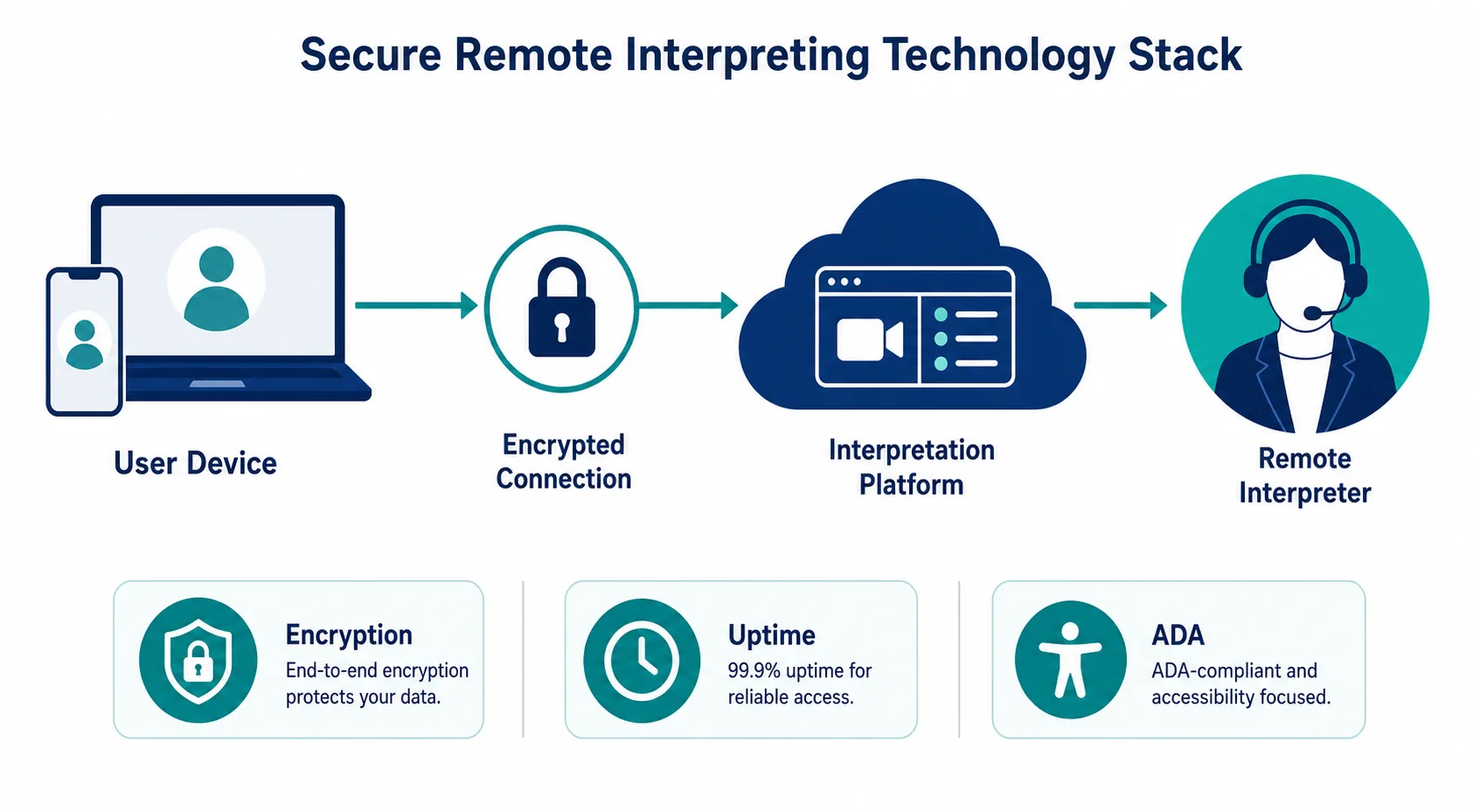
For OPI and VRI, the platform is part of the service. Specify the requirements: the remote interpretation technology or app, any integration with your systems, uptime commitments, and device or bandwidth needs.
Because interpreting often touches sensitive information, tie technology to security. Ask about data encryption, privacy safeguards, and where data is stored. Add accessibility requirements so remote sessions meet ADA standards. Competing checklists tend to mention technology in passing; treating it as a compliance question is what protects you after the contract is signed.
Left open, one vendor quotes per minute and another per hour, and comparison becomes impossible.
Pricing Structure & How Vendors Should Quote
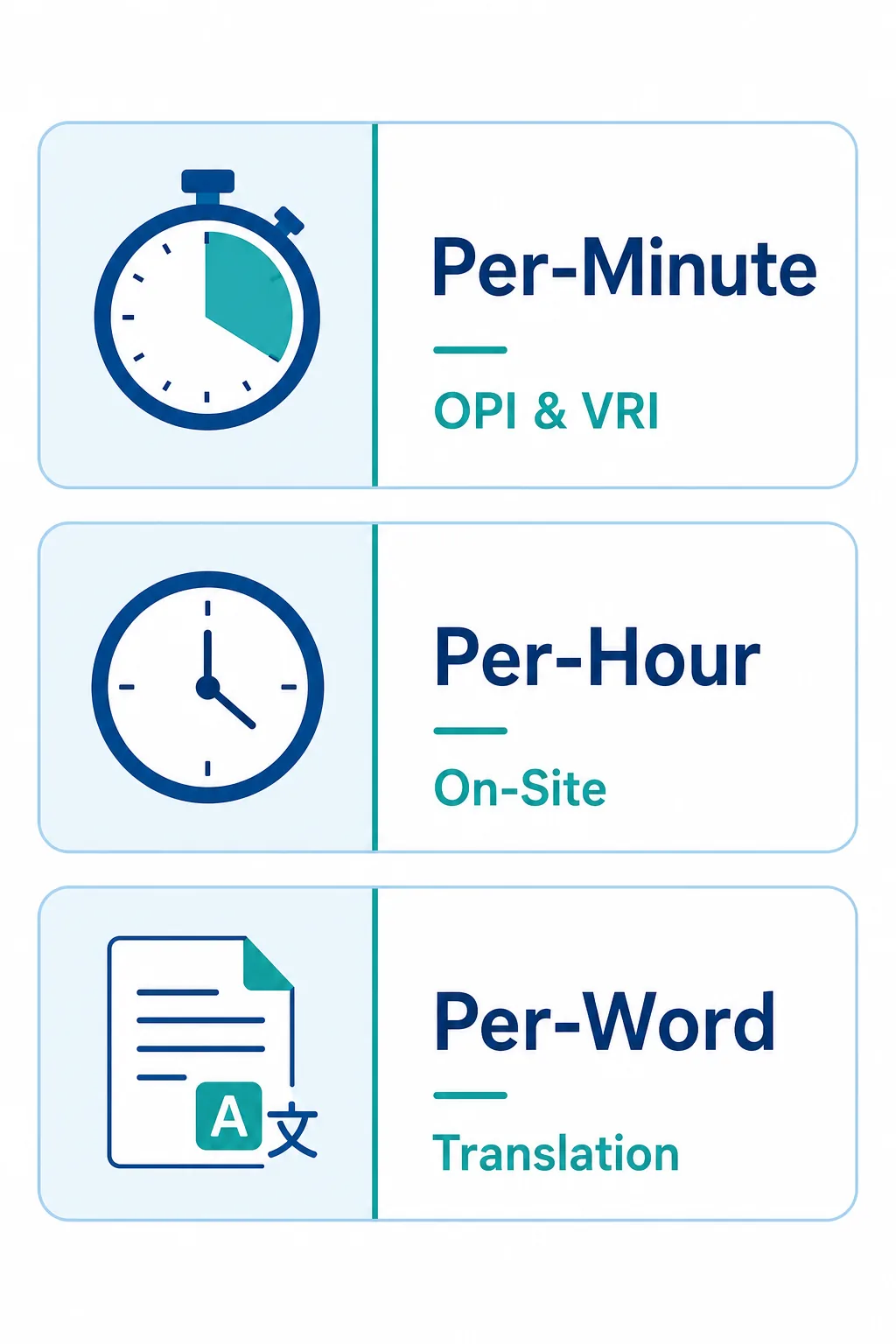
Tell vendors exactly how to price so bids come back apples-to-apples. Request:
- Per-minute rates for OPI and VRI.
- Hourly rates plus any minimums for on-site interpretation, including travel and after-hours or rush charges.
- Per-word rates where written translation overlaps your scope.
If your needs extend into document work, translations for business use, or specialized areas like Spanish legal translation, name it as a related scope item so vendors quote it rather than assume it. Ask for a clear rate card and every applicable minimum.
Submission Logistics, Timeline & Evaluation Criteria
Spell out the mechanics so proposals arrive in a usable, comparable form.
What vendors must submit
Require a company profile, client references, sample interpreter certifications, and proof of insurance. State the format, page limits, deadline, and a single point of contact for questions.
Evaluation criteria and weighting
Publish how you’ll score bids, for example, the relative weight given to quality, price, and relevant experience. Transparent weighting keeps evaluation fair and defensible. The California Courts’ statewide remote interpreter services RFP models a formal submission and evaluation structure worth borrowing.
What Is a General Guideline for Interpreter Services?
At the principle level, interpreter services should be delivered by qualified, appropriately certified, impartial interpreters who render the message completely and accurately, keep strict confidentiality, and use the right modality for the setting. Every requirement in the checklist above is a way of procuring against that underlying standard.
Frequently asked questions
What’s the difference between OPI and VRI?
Should one RFP cover both interpretation and translation services?
How long should an interpreter services RFP timeline be?
Do I need separate requirements for legal or medical interpreting?
The sharper your RFP, the better the language partner you’ll find.