

Machine translation post-editing (MTPE) starts with a draft from a translation engine, which a professional linguist then corrects and refines. Human translation starts with a linguist creating the target text rather than editing a machine-generated draft. Both workflows involve people. The difference is where the work begins.
Neither workflow guarantees a better result by name alone. Choose according to the content’s purpose, the consequences of error, the required review, and evidence from your actual language pair.
The Short Answer: MTPE vs Human Translation at a Glance
| Human Translation | Machine Translation Post-Editing | |
|---|---|---|
| Starting point | A linguist translates the source | A machine produces the draft; a linguist checks and edits it |
| Tools | May use translation memories, glossaries, and other approved tools | Uses an engine plus editing and quality-control tools |
| Speed | Depends on content, reuse, and review requirements | Can be faster when the draft is suitable; test the full workflow |
| Cost | Quote depends on scope and required review | Potential savings depend on correction effort and the same quality target |
| Quality | Depends on expertise, instructions, and review | Depends on those factors plus engine output and editing scope |
| Relevant ISO scope | ISO 17100:2015 addresses translation services and excludes MT plus post-editing | ISO 18587:2017 addresses full human post-editing |
If you are not bilingual and simply need the job done right, the useful question is not “AI or people?” It is: who will read this, what happens if something is wrong, and when do you need it?
What Is Machine Translation Post-Editing?
In MTPE, a neural machine translation or AI engine produces the first draft. A trained post-editor then compares that draft against the source text, fixes errors in meaning, corrects terminology, and adjusts the wording so it reads properly in the target language.
Agree on what will be reviewed and who approves delivery. Client feedback on terminology can help, but it does not replace qualified bilingual review.
CCI Group’s translation services include machine translation with human post-editing. Confirm the editing level, deliverables, and review steps for your project.
Light vs Full Post-Editing
Not all post-editing is the same, and the level you choose shapes both price and result.
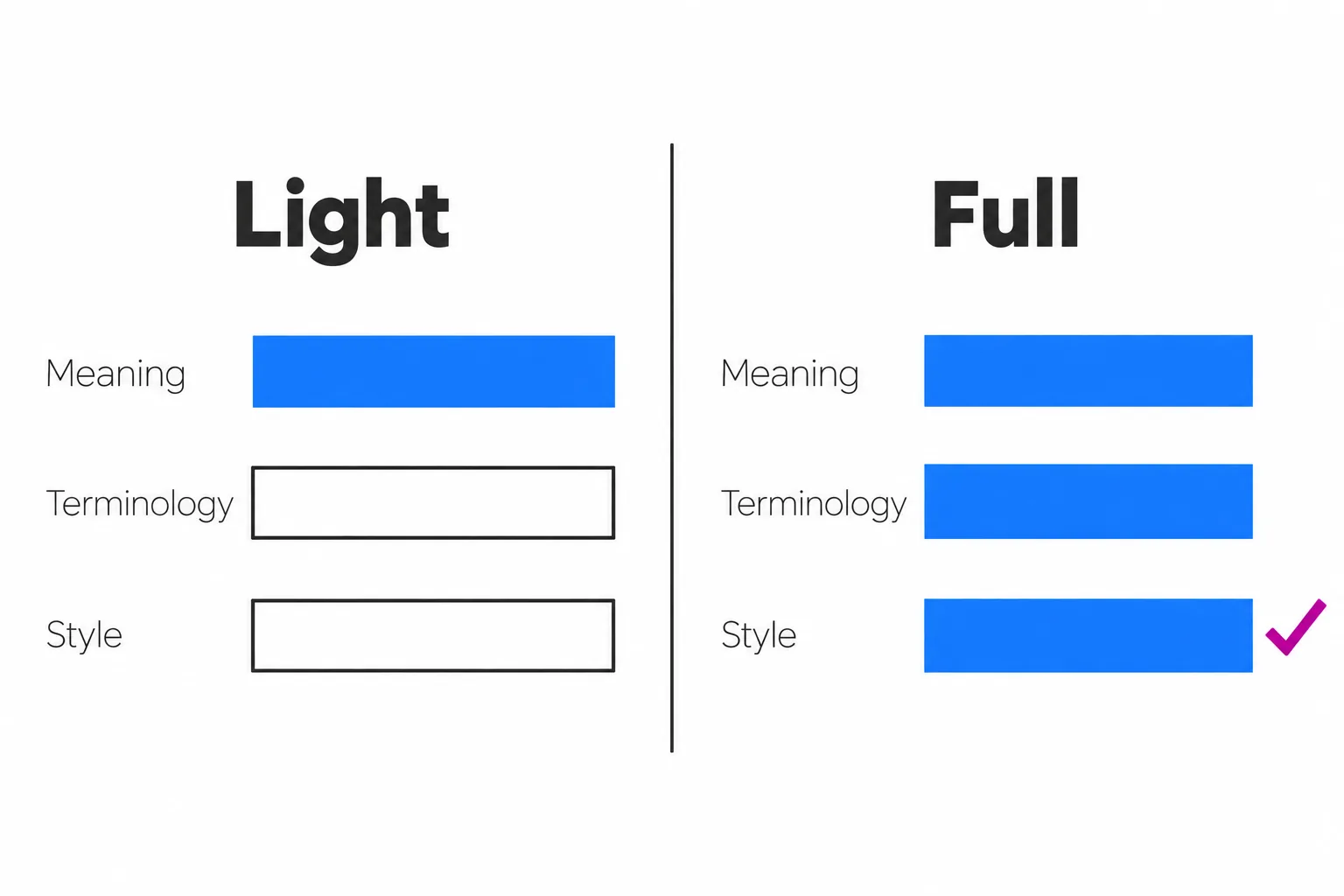
- Light post-editing focuses on basic accuracy and understanding, with limited stylistic refinement. Consider it only where the intended use and consequences of error permit that level of output.
- Full post-editing aims to meet agreed requirements for meaning, terminology, grammar, style, and audience. It is more than a quick proofread. Define the review and acceptance criteria before work starts.
ISO’s description of ISO 18587:2017 specifically covers full human post-editing and post-editor competence. Do not assume light editing falls within that scope. Confirm the edition and any conformity requirements in your agreement.
When you request a quote, state the level in writing and describe the audience. That keeps the price and the finished output aligned with what you expect.
What Is Human Translation?
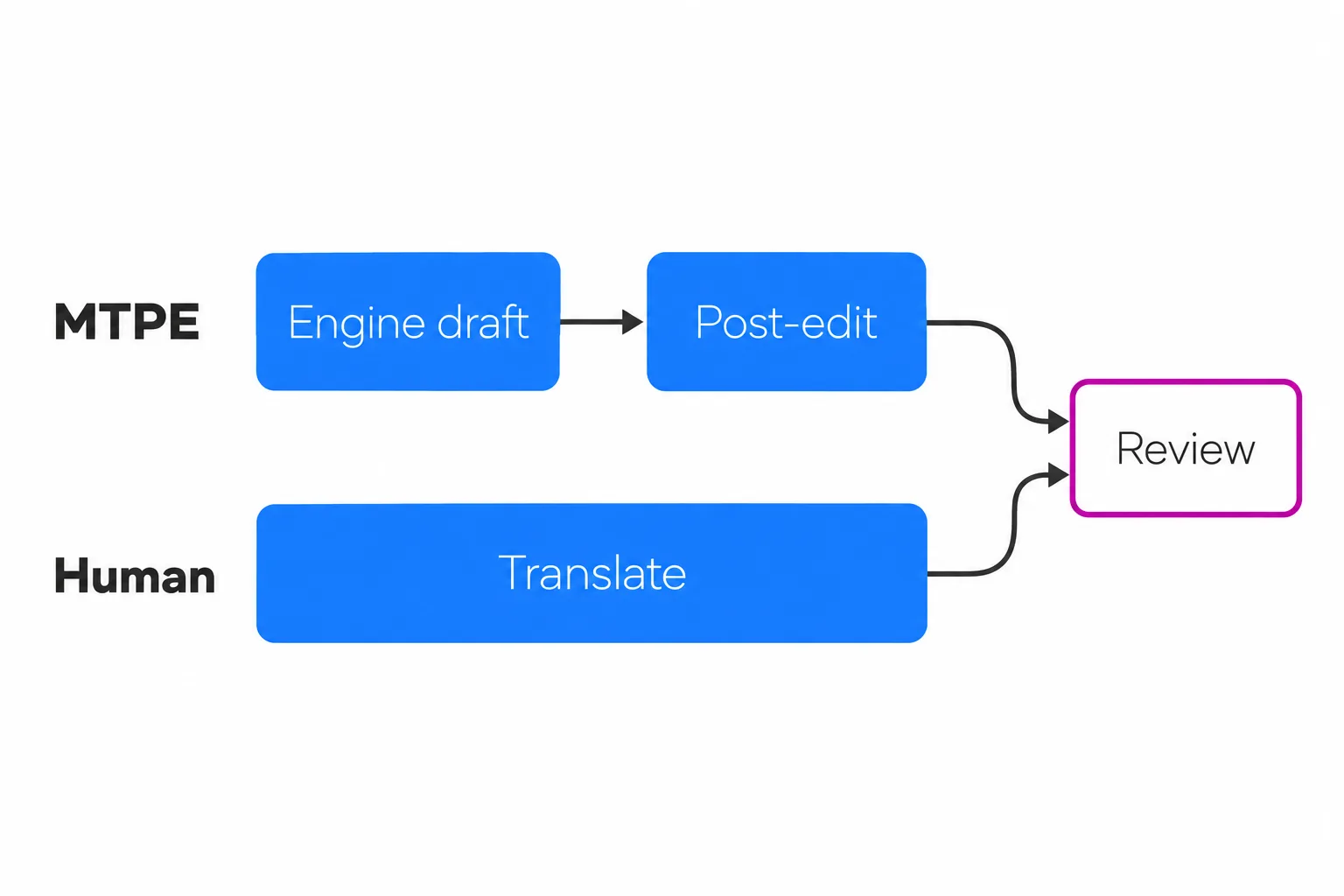
In human translation, a linguist develops the translation from the source, making decisions about meaning, terminology, tone, and cultural context. This can still involve approved translation memories and terminology databases. Using software does not automatically make a project MTPE.
Quality comes from the review process, not just the first pass. Ask whether a second linguist will compare the translation with the source and who performs final checks. Proofreading spelling or layout alone is different from bilingual revision.
The public scope of ISO 17100:2015 covers translation-service processes and resources, while excluding raw machine output plus post-editing. A provider mentioning the standard does not establish certification or conformity for your project. Ask for relevant evidence when those claims matter.
If a quote uses “translation, editing, proofreading” or TEP, ask what each step includes and whether a separate reviewer is involved. The label alone does not tell you the complete quality process.
Key Differences: Process, Speed, Cost and Quality
Process. In MTPE, the linguist evaluates an existing machine draft. In human translation, the linguist develops the target wording without that starting draft. Either workflow needs clear terminology, context, and delivery requirements.
Speed. A strong machine draft can reduce editing time. Poor output, unclear source text, complex formatting, or extensive rewriting can remove the advantage. Compare delivery time after review and corrections, not engine speed alone.
Cost. Compare quotes for the same quality target and deliverables. Include terminology preparation, file handling, editing, bilingual revision, formatting, and agreed corrections. A lower drafting price is not automatically a lower total project cost.
Quality. Full MTPE can produce strong results, while human translation can also contain errors. The reviewer’s competence, the brief, and the acceptance process matter in both. Creative adaptation may require rebuilding a message rather than correcting sentences.
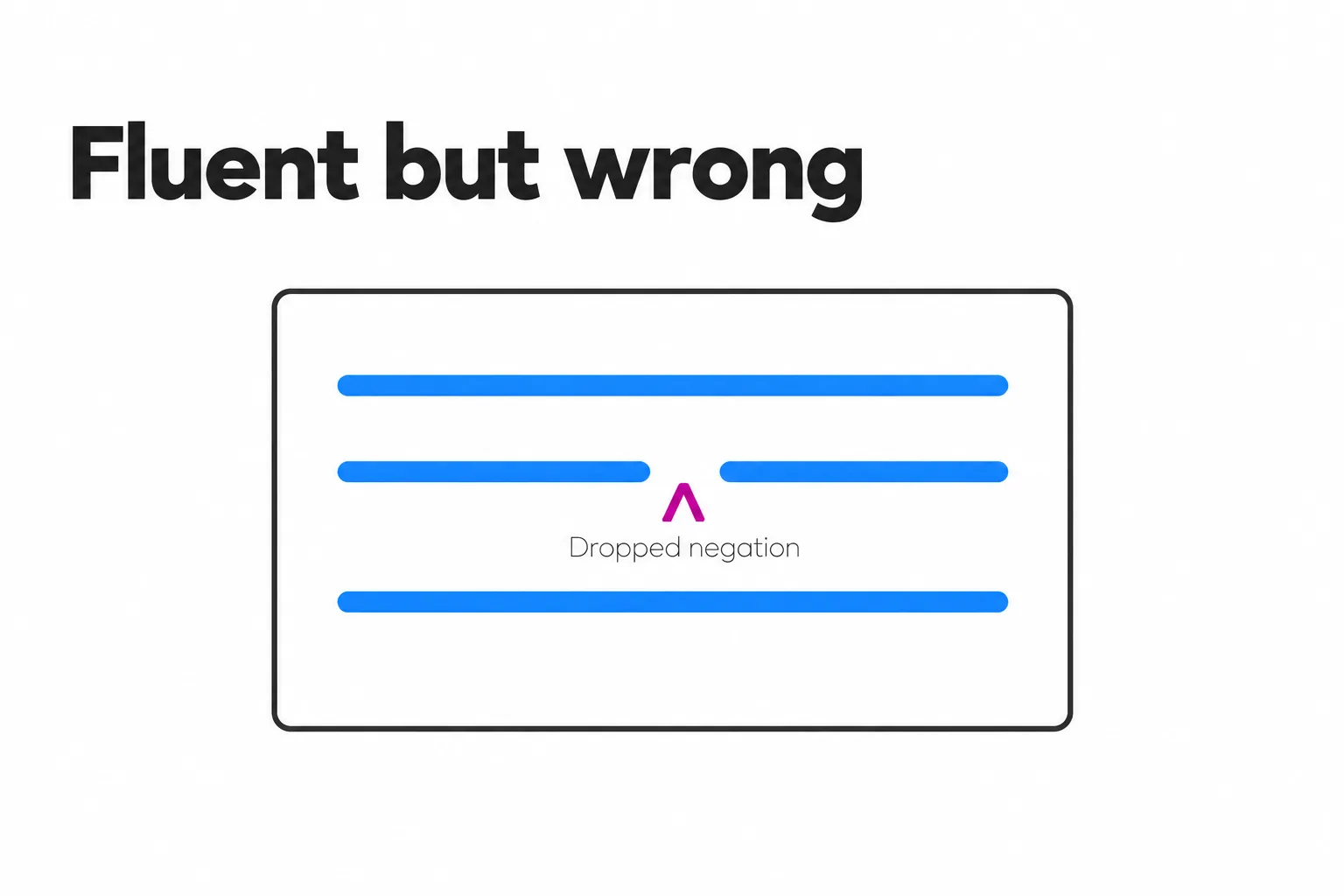
Machine output can sound fluent while being wrong: a dropped negative, an omitted clause, a literal phrase that shifts the meaning.
Error profile. Machine output can sound fluent while being wrong: a dropped negative, an omitted clause, a literal phrase that shifts the meaning. Require checks against the source for names, numbers, obligations, exclusions, and other details that could change the reader’s actions.
A 2025 English–Chinese study found post-editing advantages in speed and rated quality under its test conditions. It involved 31 translation students and two short technology-news texts, using high-quality machine output. Those results do not establish universal savings or quality advantages for other documents, languages, or production teams.
When to Use Each: A Decision Guide by Content Type
Use these as starting points, then validate the workflow for the actual project:
Related readingImportance of Localizing a Mobile App: Benefits & GuideRead the guide →| Content or situation | What to evaluate |
|---|---|
| Repetitive support content or product data | Test MTPE for accuracy, consistency, and total effort |
| Internal reference or triage material | Define the permitted use and review level; internal does not always mean low risk |
| Contracts, rights notices, or patient instructions | Check applicable rules, approved tools, qualified review, and any specialist sign-off |
| Campaigns, slogans, or culturally specific messages | Consider human translation or transcreation where substantial creative adaptation is needed |
| Poor machine output or unsupported terminology | Consider translating from the source instead of repeatedly repairing the draft |
| Languages with limited validated engine performance | Confirm suitable tools and qualified linguists; do not rely on a general language count |
Public-facing content does not automatically rule out full MTPE. Conversely, an internal safety instruction may need stringent review. Consequences and acceptance requirements matter more than the audience label alone.
If your project includes websites, apps, or multimedia, CCI’s localization and multimedia services also address adaptation, formatting, and testing beyond the translated words. Include those tasks when comparing workflows.
Does Certification Decide the Translation Workflow?
Certification is separate from the drafting method. It concerns the statement and other requirements the receiving authority expects; it is not a fourth workflow alongside machine translation, MTPE, and human translation.
For example, USCIS translation requirements require a full English translation certified as complete and accurate, along with the translator’s certification of competence.
Do not infer from that requirement that every authority permits or prohibits MTPE. Check the receiving body’s current rules, any contractual restrictions, the provider’s process, and who accepts responsibility for the final translation. An ISO service standard is also distinct from a document’s certification statement.
Run a Pilot Before Committing a Large Volume
Ask whether your provider can test representative content before you choose a project-wide workflow:
- Select realistic samples. Include difficult passages, terminology, numbers, tables, and context-dependent wording, not only easy sentences.
- Set one quality brief. Specify audience, terminology, style, required checks, and how serious errors will be handled.
- Compare complete workflows. Include review, corrections, and final formatting in time and cost estimates.
- Use qualified bilingual evaluation. A fluent-looking target text or automated quality score alone does not establish accuracy.
- Agree on a fallback. Define when poor output should be rewritten from the source and who approves that change.
Keep the results by language direction and content type. Success on one document or language pair does not automatically validate the rest of the project.
Confidentiality and Accountability in Either Workflow
Government agencies, courts, and healthcare organizations answer for the accuracy of what they publish. Record which workflow was used, which tools were involved, and who reviewed the final text.
Do not upload sensitive material to an unapproved tool. Ask about storage location, retention, access controls, subcontractors, model-training use, and deletion terms. A tool being paid or described as private does not, by itself, establish that it meets your requirements.
These checks apply to human translation too, because human translators may use connected software. Agree on approved tools, the extent of human review, and any consent or disclosure requirements before sharing files.
Questions to Ask a Language Provider Before Choosing MTPE
- Which engine or model will process the content, and what happens to our data?
- Is the service light editing, full post-editing, or selective review?
- Is there a separate quality review step after post-editing?
- Who checks source-to-target accuracy, and what relevant expertise do they have?
- If ISO conformity or certification is claimed, which edition, scope, and evidence apply?
- Can you run a pilot on a sample before we commit?
- What is included in the quote, and what happens if the draft needs retranslation?
How CCI Group Helps You Pick the Right Workflow
CCI Group offers translation, certified documents, MTPE, and creative adaptation. Share the content’s purpose, audience, languages, deadline, and receiving-authority requirements, so the team can discuss an appropriate scope. Confirm the review process and permitted technology in the proposal.
Public-sector buyers can review CCI’s Sourcewell purchasing route under Contract 081225-IDY. Its page lists human translation and proofreading. Confirm covered services, permitted workflows, agency eligibility, and purchasing conditions before placing an order.
Not sure which approach fits your project? Discuss your translation requirements with CCI Group and request a proposal with a confirmed scope and delivery timeline.