

E-learning localization cost depends on the words, languages, media, and technical work in your course. A translation rate covers only part of the budget: adapting narration, graphics, quizzes, and the working course adds separate costs.
Start with a file-based estimate for each target language. The guide below separates a published translation benchmark from the other work you need to price.
How Much Does E-Learning Localization Cost? The Short Answer
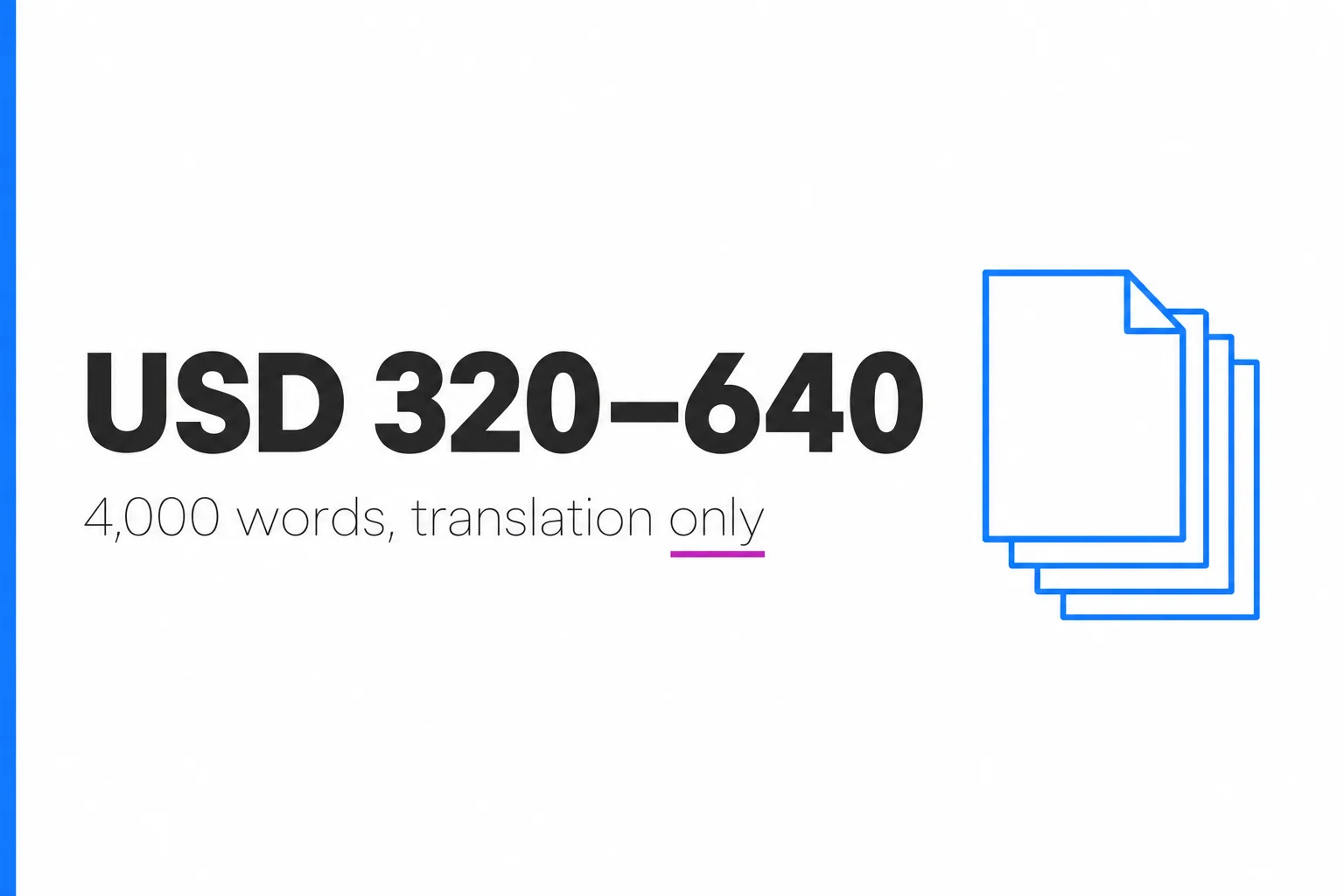
As one published reference, VEQTA lists USD 0.08–0.16 per source word for translation on its e-learning translation service page. At that rate, 4,000 words would cost USD 320–640 for translation into one language, before other course-localization work.
This is one provider’s published translation range, checked October 26, 2026. It is not CCI Group pricing, an industry average, or an all-inclusive course rate. Confirm the language pair and review steps included in any quote.
For a complete budget, add media production, course adaptation, review, testing, and project management. Do not estimate the whole project from learner minutes or a fixed percentage of the original development cost alone.
Vendors may combine several pricing units:
| Pricing unit | What it can cover | What to clarify |
|---|---|---|
| Per source word | Course text, scripts and supporting documents | Word-count basis, repetitions and review steps |
| Per finished audio/video minute | Narration, subtitles or other media work | Whether the rate includes translation, recording, timing and usage rights |
| Per course minute | A scoped bundle of localization tasks | How duration is measured and which tasks are excluded |
| Per hour or project | Engineering, graphics, testing or a complete assignment | Deliverables, revision rounds and change charges |
Learner seat time and narration duration are different. A course with branching paths also needs an agreed method for counting content beyond a single learner’s route.
What Are You Paying to Localize?
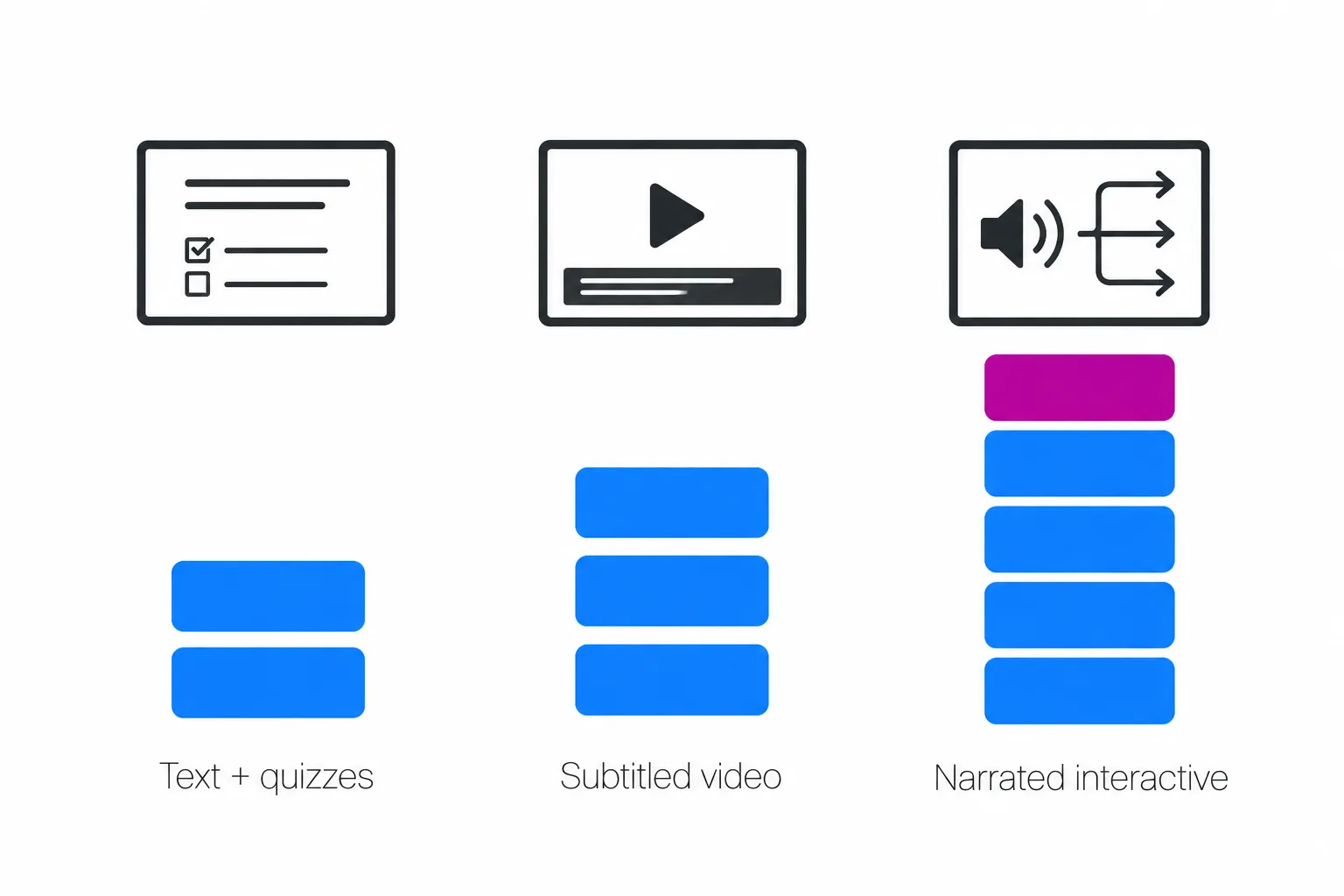
Localization adapts the learning experience, including language, examples, media, layout, and interactions. A text-only module may need less work than a shorter course with narration and branching scenarios.
These are useful scoping categories, rather than standardized vendor pricing tiers:
| Course format | Work to include in the quote |
|---|---|
| Mostly text and simple quizzes | Translation, text import, layout, quiz review and functional testing |
| Recorded video with subtitles | Script preparation, translation, subtitle timing and checks on embedded text |
| Narrated interactive course | Voice production, synchronization, graphics, branches and per-language testing |
Testing belongs in every scope. The amount of testing changes with the course’s complexity.
Per-Word Pricing for Course Text
When a vendor prices by the word, the count usually includes more than the visible slide text:
- On-screen text and headings
- Quiz questions, answer options and feedback messages
- Narration and video scripts
- Button labels, menus and navigation prompts
- Alt text for images
- Hidden metadata, such as course titles and descriptions in your LMS
Ask how duplicate text is counted when a script also appears on screen. Translation may be reusable, while placement and testing still require work in both locations.
Human translation and machine translation with human post-editing (MTPE) are possible workflows. MTPE can reduce drafting effort, but the total depends on the initial output, language pair, subject, and review requirements. It does not automatically make a course cheaper.
For safety, compliance, or other consequential training, agree on qualified language review, subject-matter approval, and checks inside the finished course. Neither workflow removes those responsibilities.
Translation memory stores previously translated segments for reuse. Ask for the vendor’s match analysis and discount policy; repeated text is not automatically free. Layout, audio, and testing may still need updating.
If the course includes handbooks or policy documents, include them in the scope for written-content translation. Confirm their formatting and delivery requirements separately.
How Language Choice Affects the Price
Request a separate estimate for each language and regional audience. Specialist availability, terminology, voice casting, and technical requirements can affect the price; a language’s popularity alone does not establish its rate.
The language also changes how much technical work your course needs:
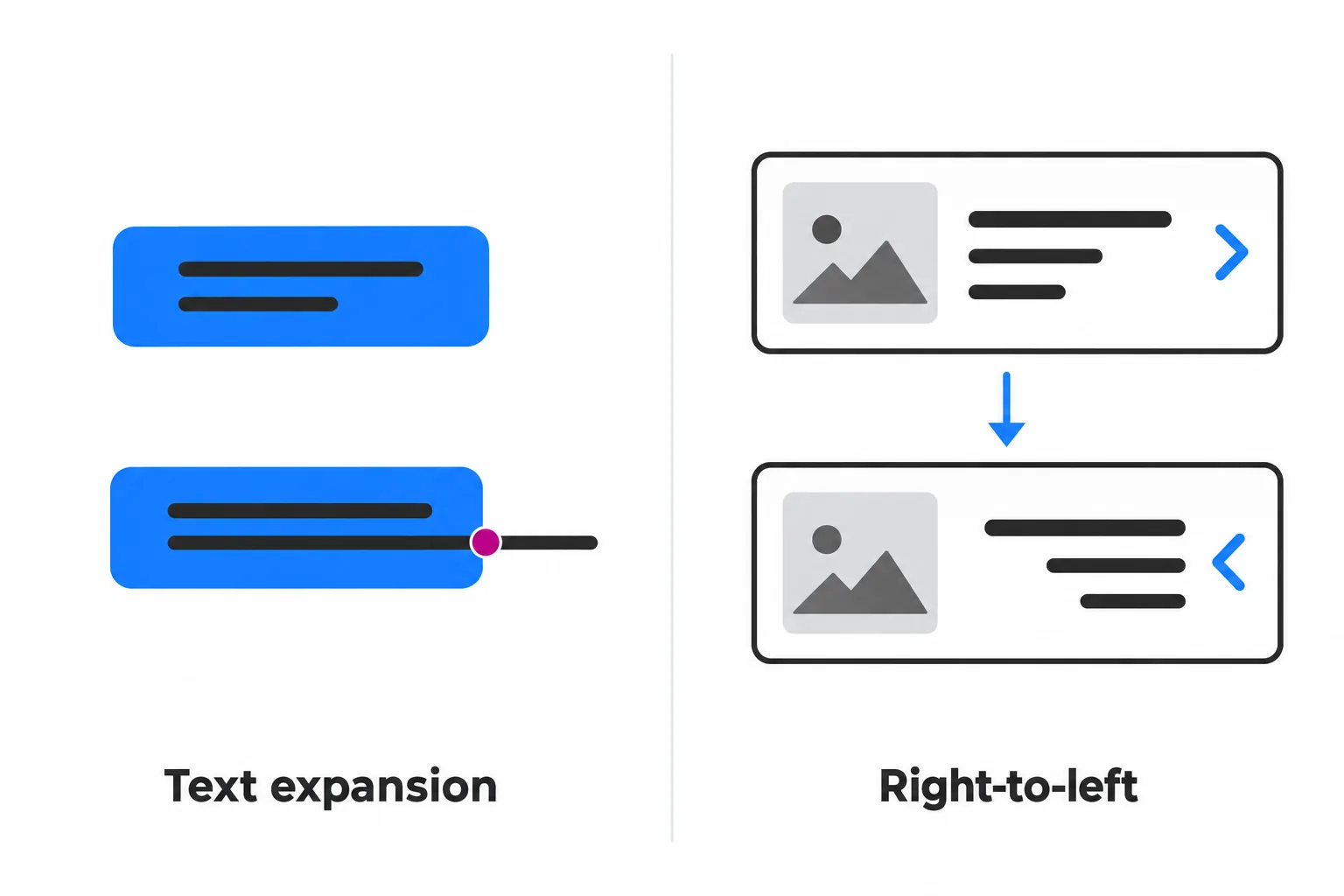
- Text expansion. Allow space for longer translations in buttons, menus, and slide layouts. Check the translated screens rather than relying on a fixed expansion percentage.
- Scripts and fonts. Test character support, line breaks, and readability in the authoring tool and published course.
- Right-to-left content. Arabic and Hebrew need correct text direction and mixed-script handling. Review navigation and layout selectively; do not automatically flip every image or symbol. W3C’s right-to-left guidance explains why direction needs explicit handling in HTML content.
Cultural Adaptation: Images, Examples, and Scenarios
A well-localized course should feel like it was built for the learner. That can mean changing names in role-plays, currencies in finance examples, date and number formats, workplace photos, and idioms that do not translate literally.
Identify examples that need rewriting before translation begins. For policy or compliance training, have the responsible subject expert approve regional changes. A translator should not be expected to decide which legal or organizational policy applies.
The Cost Drivers Behind Every Quote
Beyond the word count, check these items:
- Audio and voiceover. Scope the number of voices, recording method, pronunciation review, retakes, synchronization, and usage rights.
- Video. Separate subtitles, accessible captions, dubbing, and replacement of text inside the picture. None is a universal substitute for the others.
- Graphics with embedded text. Supply editable artwork so labels and screenshots can be adapted without unnecessary rebuilding.
- Authoring files. Identify the tool, version, and editable files available. A published course package may not provide the source assets needed for straightforward editing.
- Interactivity. Include every branch, quiz, feedback state, and completion condition in the testing scope.
- Languages and deadlines. Some preparation can be shared, but each language still needs production and review. Ask whether expedited delivery changes the price.
Tool exports also have limits. Articulate’s manual Storyline translation instructions explain that closed captions, trigger conditions, and player labels require separate handling in that workflow. Confirm which workflow your project will use.
Hidden Costs Most Teams Forget to Budget For
- Reviewer time. Name an internal reviewer and budget for their terminology, policy, and final-course approvals.
- Software and delivery. Ask who pays for authoring licenses, translation features, publishing, and any separate platform fees.
- Review rounds. Agree on included rounds and distinguish supplier corrections from new source content or changed preferences.
- LMS testing. LMS means learning management system. Confirm the required delivery format and test launch, scoring, completion, and resume behavior in the target environment.
- Accessibility. Include relevant captions, text alternatives, keyboard access, and other agreed checks in each language version. Translated dialogue subtitles alone may omit speaker identification and meaningful sounds; Section508.gov’s caption guidance explains those differences. Confirm which accessibility requirements apply to your organization.
- Future updates and ownership. Agree on delivery of editable files, translation memory, glossaries, and media assets, subject to licensing terms. Updates may require rerecording and retesting as well as translating changed text.
A Worked Budget Example
Suppose your course contains 4,000 source words and needs Spanish and Korean versions. The word count is an example input, not an estimate of how many words every course contains.
Applying the published translation-only benchmark above shows the arithmetic:
| Calculation | Translation-only amount, USD |
|---|---|
| 4,000 words × 0.08–0.16 × one language | 320–640 |
| 4,000 words × 0.08–0.16 × two languages | 640–1,280 |
This assumes both languages fall within that provider’s published range. It does not establish their actual rates or imply that Spanish and Korean cost the same. It also assumes no repetition discounts or minimum charges.
To turn that subtotal into a full budget, request separate prices for:
- Shared file preparation and terminology setup
- Each language’s narration or subtitles, graphics and course adaptation
- Language review, functional testing and accessibility checks
- Project management, agreed revisions and any applicable fees or taxes
Total project budget = shared setup + all language-specific work + other agreed charges.
No full-course dollar total is shown because the media, engineering and testing rates have not been quoted. Adding unsupported amounts would make this example look more precise than it is.
How to Lower E-Learning Localization Costs Without Cutting Quality
- Design for localization from the start. Keep text out of images, leave room for text expansion, and record audio on separate tracks.
- Send editable source files and a glossary up front. This prevents rebuilds and keeps key terms consistent.
- Approve the source before production. Changes made after translation or recording create additional work across languages.
- Choose media for the audience. Subtitles may avoid new narration costs, but consider reading needs, learning tasks, and accessibility before replacing audio.
- Reuse approved translations. Ask how translation-memory matches affect the quote and how the memory will be maintained.
- Group related work where practical. Shared preparation may reduce duplication; request the actual savings rather than assuming a volume discount.
- Pilot a representative module. Include a quiz and media-heavy section so you can resolve terminology and technical issues before scaling up.
How to Choose an E-Learning Localization Partner
Compare the same scope, rather than only the lowest word rate. Ask each provider to confirm:
- Relevant language and subject expertise
- The translation and review workflow
- Experience with your authoring tool, version, and delivery format
- Narration, graphics and accessibility deliverables
- Testing responsibilities and acceptance criteria
- Data handling, ownership, revision allowances and update charges
CCI Group’s localization and multimedia services include e-learning and LMS content, voiceovers, subtitles and related adaptation. Ask the team to confirm the workflow, tools and deliverables for your course.
Public-sector buyers should also confirm the purchasing route and service scope with their procurement team. A language-services contract should not be assumed to cover every element of a course-production project.
Frequently asked questions
Do I pay per language or per course?
Is AI translation the cheapest option?
Can you localize Articulate Storyline or Rise courses?
How long does e-learning localization take?
What if I only have the published course?
Get a Clear Quote for Your Course
To get an accurate estimate, send us:
- Your source files (or tell us what you have)
- Course length and number of modules
- Target languages
- Audio, voiceover, and video details
- Your deadline and LMS requirements
Include accessibility needs, review expectations, and supporting documents. Contact CCI Group about your course or call (727) 657-3167 to discuss the scope and request a quote. Ask the team how to share any sensitive files.