

A resident walks up to your front counter speaking Vietnamese. A witness at the scene only speaks Haitian Creole. A parent needs to follow an IEP meeting in Spanish. You may use a bilingual employee, a qualified staff interpreter, or a contract interpreter. The right choice depends on the task, qualifications, workload, and coverage needed.
Employment status alone does not decide quality. Use assessed bilingual skills for direct service and verified interpreting competence whenever someone interprets between other people.
Bilingual Staff vs Contract Interpreters at a Glance
Bilingual staff use more than one language in their work. They may communicate directly with clients without serving as interpreters.
Qualified staff interpreters are employees authorized and assessed to interpret. Some do this as their main job; dual-role employees combine it with another position.
Contract interpreters work under a service agreement, directly or through a provider. Verify their qualifications for the assignment rather than assuming the contract proves competence.
| Factor | Bilingual Staff | Contract Interpreters |
|---|---|---|
| Training | Assess direct-language skills; interpreting requires additional competence | Verify interpreting training and assignment fit |
| Ethics and privacy | Employee policies apply; interpreters also need clear professional standards | Check ethics, confidentiality, and data-handling terms |
| Availability | Depends on shifts, leave, workload, and authorized duties | Depends on booked or contracted coverage |
| Language range | Depends on the assessed staff roster | Confirm each language, dialect, and delivery method |
| Cost structure | Staff time, training, supervision, and any backfill or differential | Billable time, minimums, fees, and contract administration |
| Quality evidence | Assessment records and performance review | Qualification records and provider quality review |
Can Bilingual Coworkers Be Used as Interpreters?
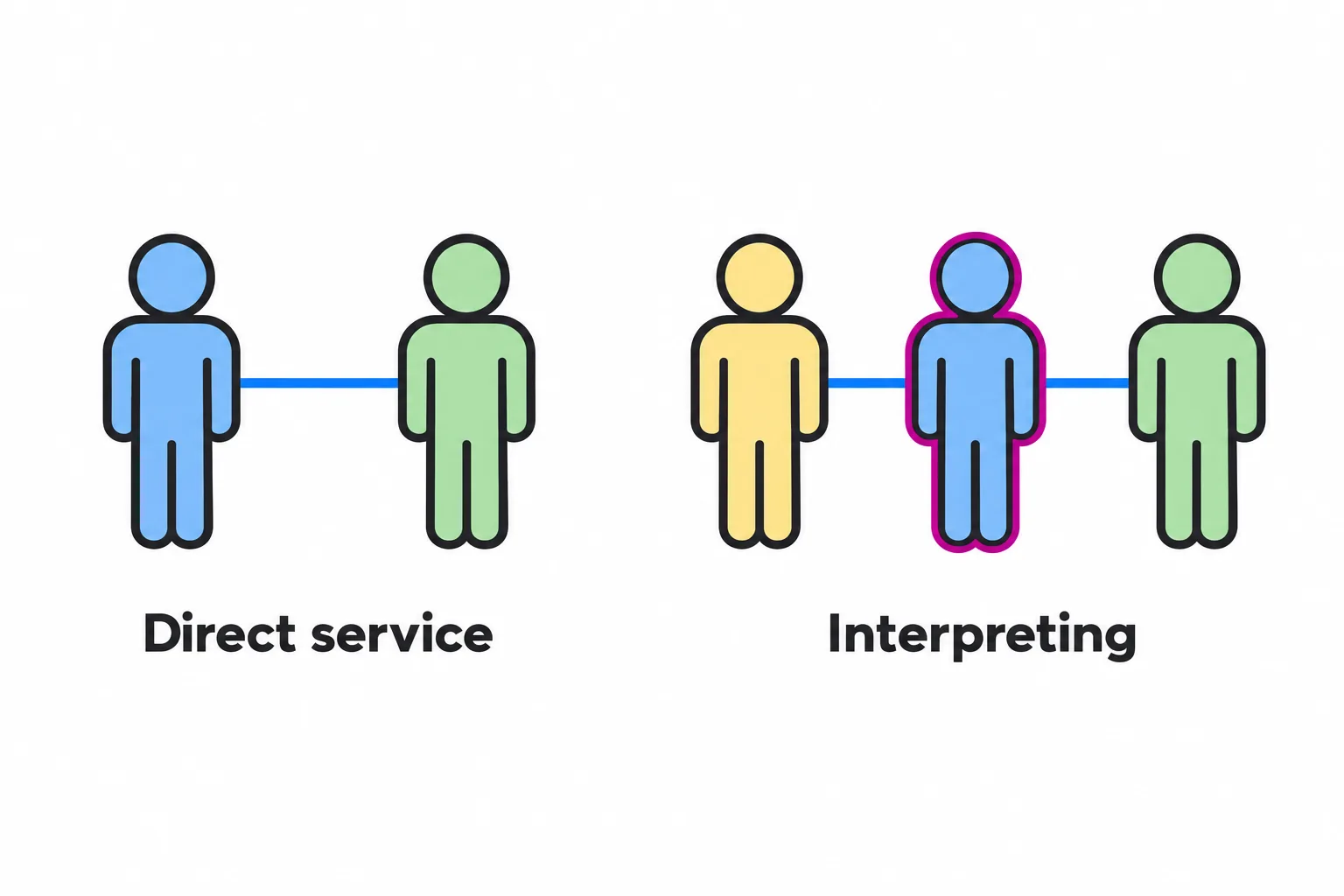
Yes, if they are qualified and authorized for that interpreting assignment. Speaking two languages, holding a bilingual job title, or receiving bilingual pay does not establish those skills by itself.
Healthcare credentialing body CCHI distinguishes direct-service and dual-role staff and explains that dual-role employees need interpreting competence as well as skills for their primary job. Other organizations should also define which role they are assigning.
One useful distinction: a bilingual caseworker conducting their own intake in Spanish is communicating directly. That same caseworker standing between a judge and a defendant is interpreting. The interpreting role needs separate assessment and authorization.
For high-stakes work, use a person qualified for the language, subject matter, and setting. That person may be an employee or contractor, subject to applicable rules.
Where Bilingual Staff Work Well
Bilingual employees are a real asset in the right places:
- Routine front-desk tasks: greetings, directions, scheduling, and simple questions.
- Continuity: staff who regularly serve a community can provide a familiar point of contact.
- Direct service in their own role: assessed employees can communicate within their authorized duties and language proficiency.
- Predictable demand: regular work in particular languages can justify evaluating dedicated or dual-role staffing.
Do not assume a worker shares a client’s culture or dialect simply because they speak the same language. Confirm understanding and provide an escalation route.
For ongoing recruitment needs, CCI’s global talent solutions include language professionals and other roles. Specify whether you need direct bilingual service or qualified interpreting when defining the position.
The Risks of Using Staff Outside Their Qualifications
Accuracy gaps. A person may speak comfortably but struggle to interpret complete statements, specialized terms, or rapid exchanges. Match the assessment to the actual task rather than relying on conversational fluency.
Workload conflict. Unplanned interpreting can interrupt an employee’s other duties. Give dual-role staff protected time, clear priorities, and relief arrangements.
Ethics and impartiality. Employees already have workplace obligations; interpreting requires explicit expectations about completeness, confidentiality, conflicts, and role boundaries. Contractors need those expectations too.
Personal connections. A staff member or outside interpreter may know the client. Require disclosure and a way to arrange another qualified person when appropriate.
Coverage gaps. Plan for languages outside the staff roster, busy periods, leave, and after-hours requests. An outside provider’s coverage also needs verification.
Outsourcing does not automatically reduce liability or remove the organization’s responsibilities.
Keep evidence of qualifications and review the quality of either model.
What to Verify for Staff and Contract Interpreters
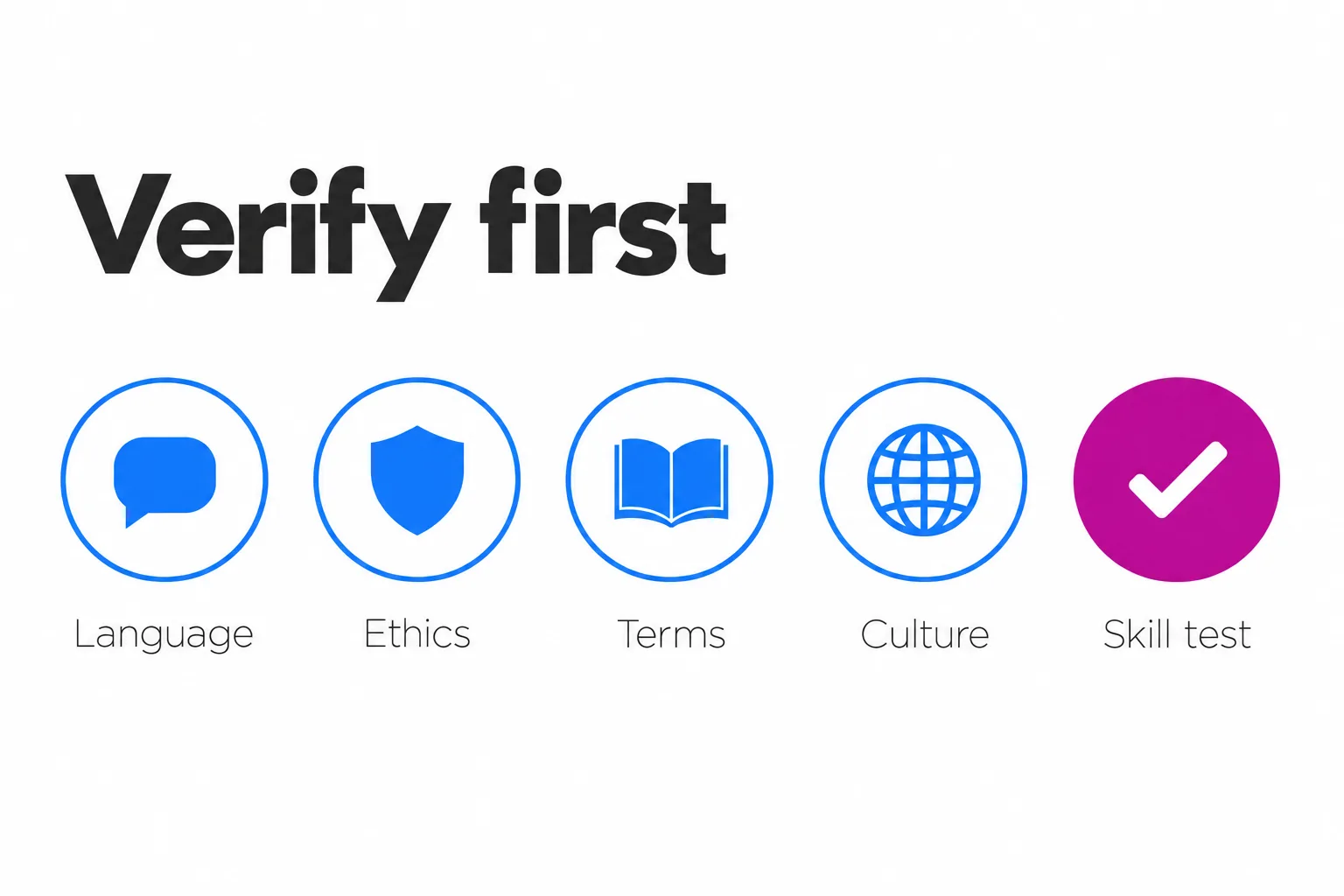
Use a documented standard for the assignment. The National Council on Interpreting in Health Care’s interpreter qualification criteria cover language skills, ethics, terminology, cultural issues, and demonstrated interpreting ability. Its healthcare framework is useful for clinical work; use the appropriate requirements for other sectors.
Ask for evidence of:
- Proficiency in the required languages and relevant dialects.
- Interpreting skills for the mode and setting.
- Subject knowledge and applicable credentials.
- Ethics, confidentiality, and conflict-management training.
- How performance is reviewed and concerns are corrected.
A training-completion certificate is not the same as professional certification. Check the credential, issuing body, scope, and validity when a credential is required.
Check the Rules for the Setting
For IEP meetings, 34 CFR 300.322(e) requires the public agency to ensure the parent understands the proceedings, including arranging an interpreter where needed. It does not state that the interpreter must be an outside contractor.
For disability access, the ADA effective-communication guidance explains that an interpreter must communicate effectively, accurately, and impartially using necessary specialized vocabulary. Consider the individual’s communication needs and applicable accommodation rules.
Courts, healthcare programs, government services, and private organizations can have different requirements. Confirm current law, credential rules, funding conditions, and organizational policy before assigning staff or vendors.
Bilingual Staff vs Contract Interpreters: Pay and Cost
Do bilingual employees get paid more? Sometimes. Some employers offer a language differential or stipend for bilingual skills, but practices vary by employer, sector, and union agreement. Confirm eligibility and compensation with HR. Extra pay does not establish interpreting competence.
Compare the same month or year, service hours, languages, and qualification level:
| Staff cost inputs | Contract cost inputs |
|---|---|
| Allocated work time and any language differential | Billable minutes, hours, or assignments |
| Assessment, training, and supervision | Booking minimums and applicable fees |
| Backfill and coverage during absences | Travel, after-hours, or cancellation charges where applicable |
| Scheduling and quality review | Account administration and quality review |
An existing salary does not make staff time unlimited or free. At the same time, avoid counting the same work hours twice. Compare actual demand and costs rather than assuming one model is always cheaper.
There is no single break-even point for every organization. Request a proposal based on your coverage needs and service terms.
Phone, Video, or On-Site: Matching the Format to the Situation
Employment model and delivery format are separate choices:
- OPI: phone interpreting can support audio-based conversations; check language availability, audibility, privacy, and connection arrangements.
- VRI: video can support visual communication, including sign language, when the setup is effective.
- On-site: consider physical presence when remote communication is unsuitable, or the interaction requires it.
CCI’s interpreting services include phone, remote, and on-site options. Confirm assignment qualifications, availability, security requirements, recording practices, and backup procedures.
A Decision Framework: When to Use Which
Run each situation through five tests:
- Task: Is the employee providing their own service or interpreting between others?
- Qualifications: Is there documented competence for the language, subject, and interpreting mode?
- Capacity: Can the employee perform the role without leaving essential work uncovered?
- Coverage: Are the language, shift, location, and backup arrangements available?
- Requirements: What does the applicable law or organizational policy require?
| Scenario | Practical starting point |
|---|---|
| Front desk greeting and directions | Assessed bilingual staff within their role |
| Routine intake by a verified bilingual caseworker | Direct bilingual service within authorized scope |
| Court hearing or deposition | Interpreter meeting the court’s qualification and appointment rules |
| Victim interview or sensitive complaint | Qualified interpreter with appropriate expertise and conflict checks |
| Parent-teacher or IEP conference | Suitable communication support that enables understanding and participation |
| Language or shift not covered internally | Qualified contracted coverage with an agreed backup |
The Hybrid Model: Qualified Staff Plus Contract Coverage
A hybrid model can combine continuity with wider coverage. Bilingual employees provide direct service; qualified staff interpreters handle authorized assignments; contracted services fill agreed language, capacity, or scheduling gaps. To build it:
- Assess proficiency before anyone interprets or provides service in another language.
- Define the scope of what bilingual staff may and may not do.
- Train on interpreter ethics such as accuracy, neutrality, and confidentiality.
- Set clear escalation rules so staff know when to call an interpreter.
- Track usage to spot language trends and justify budget.
Keep an approved roster, document who interpreted when required by your procedures, review complaints, and test backup coverage. Reassess authorization when duties or language demands change.
Eligible public-sector buyers can review CCI’s Sourcewell purchasing route under Contract 081225-IDY. Confirm eligibility, service scope, and your agency’s purchasing and funding requirements; the contract does not automatically satisfy every procurement rule.
Frequently asked questions
Can bilingual coworkers be used as interpreters?
Is a bilingual employee the same as a certified interpreter?
Do bilingual employees get paid more?
Are bilingual staff always cheaper than contract interpreters?
When should a bilingual employee call an interpreter?
Discuss Interpreting Coverage for Your Organization
CCI Group offers interpreting and staffing services. Discuss your language-access requirements or call (727) 657-3167.