

An IEP meeting shapes a child’s education for the year ahead. If a parent can’t follow the conversation, they can’t meaningfully agree, disagree, or ask questions. When interpretation is needed for a parent to understand the meeting, the public agency must arrange appropriate support.
An IEP is an individualized education program. This guide explains the interpreter’s role, how to request assistance, and how schools can prepare a meeting that parents can follow.
When Must a School Provide an Interpreter for an IEP Meeting?
Under IDEA’s parent-participation rule, the public agency must take necessary action so parents understand the IEP Team meeting, including arranging an interpreter for parents with deafness or a native language other than English.
The school should arrange and cover required meeting support. A child’s English fluency does not establish the parent’s ability to understand the discussion. Tell the school what language, dialect, or communication method you need.
Other meetings, including Section 504 meetings, can involve communication-access duties, but do not assume they operate under exactly the same regulation as an IEP meeting.
What About Deaf or Hard-of-Hearing Parents?
Public schools also have ADA effective-communication duties to parents with communication disabilities. They must give primary consideration to the person’s requested aid, subject to the law’s provisions on equally effective alternatives and limitations. DOJ’s effective communication guidance explains this framework.
American Sign Language (ASL) interpreting and CART are different services. CART provides real-time text of speech; it does not translate between languages. Discuss the parent’s communication needs rather than assigning one service to everyone with hearing loss.
What a Qualified IEP Interpreter Actually Does
The interpreter conveys messages accurately in both directions. In that role, they support communication rather than recommend services, decide placement, or speak for the parent.
A good IEP interpreter:
- Stays neutral and renders everything said, including side comments
- Keeps student records and family information confidential
- Handles special education terms accurately (FAPE, least restrictive environment, accommodations, present levels, annual goals)
- Requests clarification when a term or statement is unclear, without supplying their own educational advice
FAPE means free appropriate public education. Ask speakers to explain acronyms and assessment terms in plain language before continuing.
Can School Staff, Aides or Relatives Interpret?
Do not assume an employee is prohibited solely because they work at the school. Check interpreting competence, impartiality, confidentiality, and competing responsibilities. Conversational bilingualism alone does not establish interpreting skill.
An aide or the student’s educational interpreter may have observations to contribute or may already be providing access for the student. Trying to interpret for the parent at the same time can create conflicts or leave someone without access. Plan separate responsibilities where needed.
Children should not be the routine interpreting solution. ADA rules tightly restrict reliance on minors and accompanying adults. A relative’s presence also does not remove the school’s responsibility to ensure effective communication.
The federal IEP meeting provision does not name one universal interpreter certification. Schools should check applicable state credentialing requirements and verify the person’s language and special-education interpreting skills.
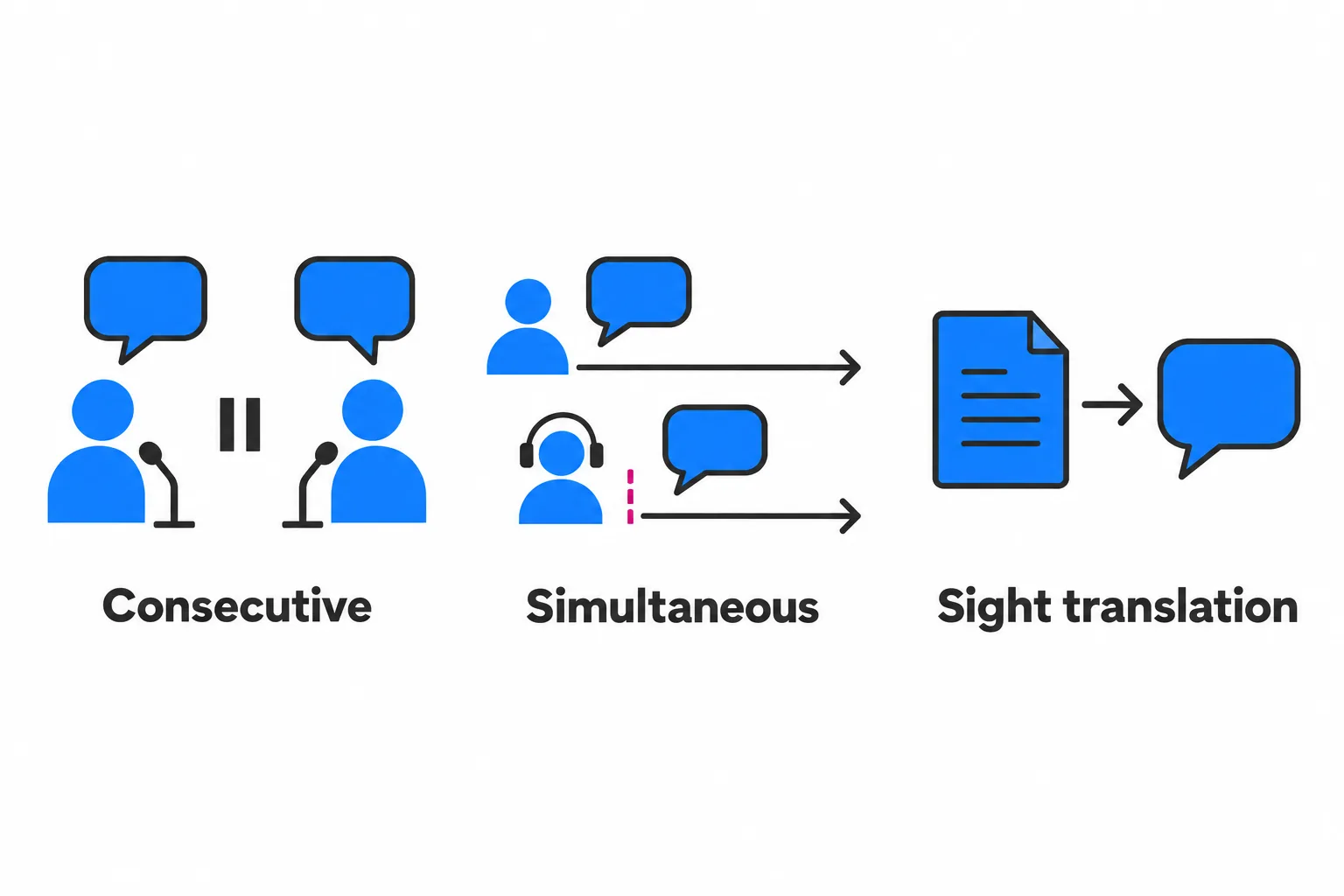
| Mode | How it works | Planning note |
|---|---|---|
| Consecutive | The speaker pauses while the interpreter conveys the message. | Plan manageable speaking segments and additional meeting time. |
| Simultaneous | The interpreter conveys speech while the speaker continues, with a short processing delay. | Equipment, channels, and turn-taking need planning. |
| Sight translation | The interpreter renders written text orally into another language. | Confirm suitability before using it for a lengthy or complex document. |
ASL is a language, not a mode equivalent to consecutive or simultaneous interpreting. CART is captioning. Identify the service and delivery method separately when booking.
Interpreting the meeting is not the same as translating the written IEP. Families may need both, but the requirements for particular documents must be checked separately.
In-Person, Phone, or Video: Choosing the Right Format
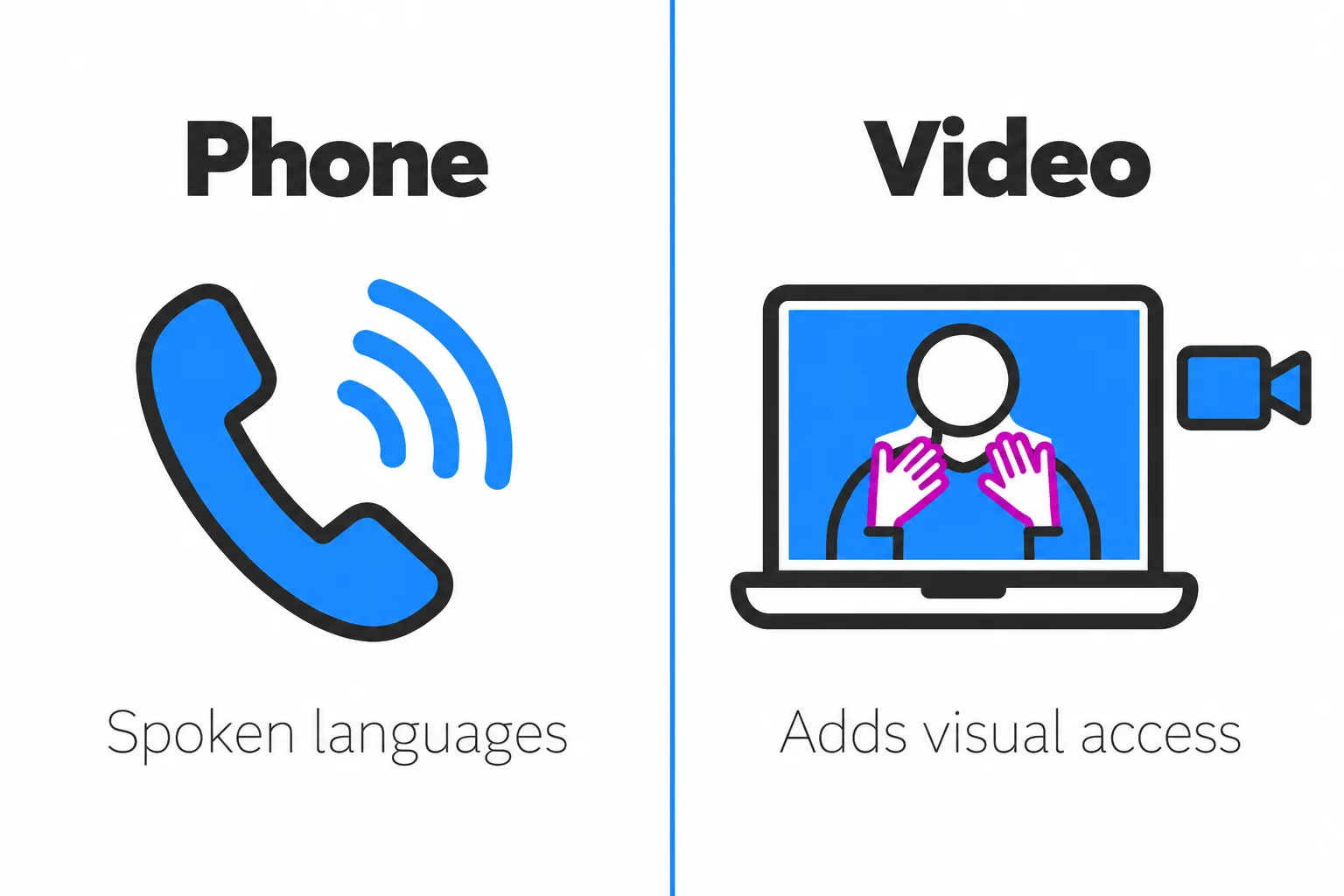
Choose a format that allows the parent to hear or see the interpretation, review materials, and ask questions. Meeting complexity, communication preferences, technology, and interpreter availability matter. No format is automatically adequate or inadequate for every IEP.
Phone interpreting may support spoken-language discussions, but it cannot deliver visual sign-language access. Video can provide visual access when the connection, camera position, and screen are suitable.
Districts can discuss on-site, phone, and video interpreting with CCI Group. Confirm the language, subject expertise, meeting length, and backup plan rather than assuming immediate local availability.
Running an IEP Meeting With a Remote Interpreter
- Test sound, video, and any interpretation channels before substantive discussion.
- Check that the parent can view documents while still accessing the interpreter or captions.
- Introduce every participant and have one person speak at a time.
- Agree on how anyone can request a pause.
- If access fails, stop to resolve it and agree on an effective alternative or reconvening arrangement.
A connected interpreter is not enough if the parent cannot follow the meeting.
Ask about understanding throughout the discussion, not only at the beginning.
How Parents Can Request an IEP Interpreter
- Tell the case manager or special-education coordinator as early as possible. Email can provide a useful record; request help making the request if needed.
- Specify the language and dialect or communication aid. Do not assume another language commonly spoken in the same country will meet your needs.
- Ask the school to record your preference and confirm arrangements for each meeting. There is no universal federal rule requiring one annual interpreter request.
- Request relevant materials in a form you understand and ask when they will be available.
- Confirm the date, format, and contact for resolving access problems.
You can adapt this message:
I need \[language/dialect interpreter or communication aid\] for my child’s IEP meeting on \[date\]. Please confirm that the school will arrange the support and explain how I can access the related documents. My preferred contact method is \[method\].
What If the Interpreter Is Missing or Ineffective?
Explain the problem immediately and ask how the school will restore your ability to participate. You can request a pause, replacement interpreter, or reconvened meeting. Keep your request and the school’s response.
Do not assume that declining to attend automatically stops school action or extends deadlines. Contact the special-education director, a parent training center, or an appropriate advocate promptly if important decisions are involved.
CADRE’s IDEA dispute-resolution guides explain options including mediation, written state complaints, and due process. The appropriate route and deadlines depend on the issue; CADRE is an information resource, not the agency that decides your complaint.
Do Parents Have a Right to a Translated Written IEP?
A copy of the IEP and a translated copy are separate questions. Federal rules require the agency to give parents an IEP copy at no cost, while state law may add specific translation requirements. Ask about the actual document and applicable rule.
IDEA’s prior written notice requirement specifically addresses understandable language and the parent’s native language or communication mode, unless clearly not feasible. If the language is not written, the agency must take steps to explain the notice by other means and document understanding.
That notice rule should not be described as a universal requirement to translate every draft or report. Schools can scope written-document translation separately from live meeting interpretation.
A Checklist for Schools: Preparing the Interpreter
- Share approved preparation materials through the district’s authorized process, with appropriate access to student information.
- Ask the interpreter to arrive a few minutes early for a quick briefing
- Introduce the interpreter and explain their role at the start
- Speak in short segments and address the parent directly, not the interpreter
- Plan extra meeting time, since consecutive interpretation takes longer
- Confirm terminology, breaks, role boundaries, and the process for requesting clarification.
- Record access problems and agreed follow-up actions without unnecessary disclosure of family information.
What Not to Say During an IEP Meeting With an Interpreter
Avoid requests to summarize important discussion, give an educational opinion, or skip a parent’s questions. Explain acronyms, avoid overlapping side conversations, and address the parent directly. Do not treat silence as agreement.
Who Leads an IEP Meeting, and Where the Interpreter Fits
The IEP team includes the parent and required school representatives and specialists; its precise membership depends on the child and applicable rules. The school should identify a facilitator to manage the discussion.
An individual who explains the instructional implications of evaluation results has a different function from a language interpreter. One does not replace the other. Someone who also holds a school role needs clear boundaries when interpreting rather than switching unnoticed between testimony, advice, and interpretation.
How CCI Group Supports Schools and Districts
CCI Group offers spoken-language interpreting, translation, and ASL and CART accessibility services. District staff can discuss the meeting language, format, preparation materials, and communication needs with the team.
Discuss an IEP meeting request with CCI Group to confirm scope and availability. Parents should request required support through their school or district first. Procurement staff should confirm the applicable purchasing route and covered services.