

Yes, in many situations. Public schools must arrange interpreters or other required communication support so parents can participate. Clear federal rules apply to IEP meetings and disability-related communication. Other school language-access duties depend on the applicable federal and state requirements.
When the school is responsible for providing the assistance, it should not pass that cost to the family. Start by telling the school which language or communication support you need.
The Short Answer: Required Support Must Match the Parent’s Needs
Your communication needs matter separately from your child’s. A Deaf parent may need communication support even if the child hears, and a parent may need language assistance even if the child speaks English fluently.
The required service is not always the same. Interpreting supports a live conversation; translation deals with written information. For disability-related access, an interpreter, real-time captions, or another effective aid may be appropriate.
Speaking some English does not automatically mean you can follow a complex education meeting. Explain which parts of the conversation or documents you cannot understand well enough to participate.
The Federal Laws Behind Parent Interpreter Rights
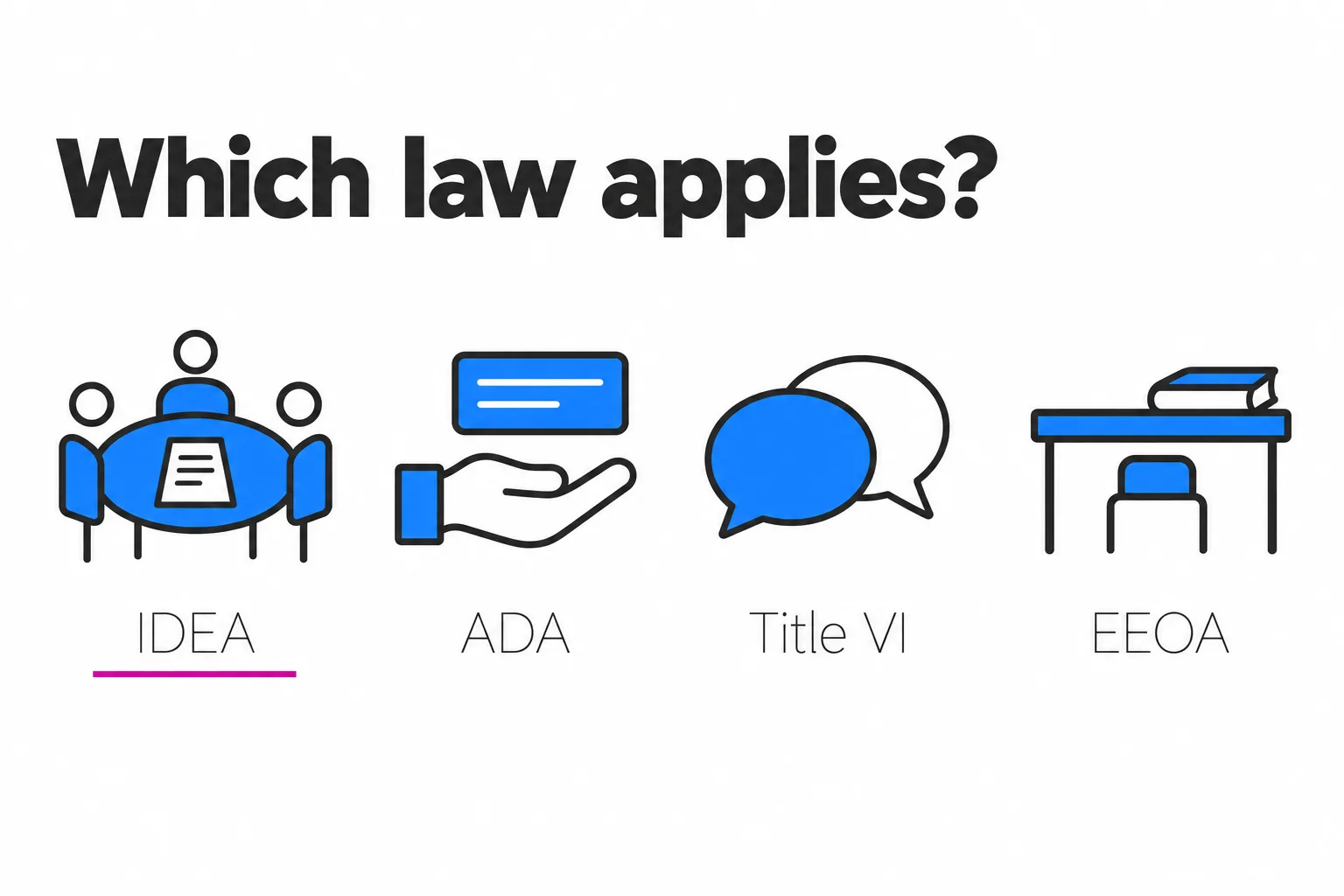
Different laws address different situations. Identify the meeting, your communication need, and the school involved before assuming one rule covers everything.
Title VI and the Recent Federal Guidance Changes
Title VI prohibits national-origin discrimination in programs receiving federal financial assistance. Language access has long been part of schools’ approach to communicating with parents who have limited English proficiency, or LEP.
However, the federal guidance landscape has changed. The Education Department rescinded its 2015 English-learner Dear Colleague Letter in August 2025. In an October 23, 2026 joint notice, DOJ and Education also said they would not rely on specified guidance, including the 2015 parent LEP fact sheet, in enforcement.
Related readingDoes a Business Have to Pay for an ASL Interpreter? (ADA)Read the guide →That notice does not itself repeal the underlying laws.
It does mean that an older fact sheet should not be presented as a current, independently enforceable rule. Schools should review applicable law and state requirements; families should still ask for assistance and a clear response.
Equal Educational Opportunities Act (EEOA)
The EEOA requires school districts to take appropriate action to overcome language barriers that keep students from participating equally in instructional programs. Its focus is students’ educational access; it should not be used as a standalone promise of a particular interpreter for every parent interaction.
IDEA and Special Education Meetings
The Individuals with Disabilities Education Act (IDEA) has a specific parent-participation rule. Under 34 CFR 300.322(e), the public agency must ensure that parents understand the IEP Team meeting, including arranging interpreters for parents with deafness or a native language other than English.
An IEP is an individualized education program. Its meetings can involve evaluations, services, and placement decisions, so parents need to understand the discussion and ask questions.
What Does the ADA Say About Interpreters?
Public schools fall under ADA Title II. Its effective-communication rules cover parents with communication disabilities when they are appropriate people for the school to communicate with, regardless of whether their child has a disability.
The school must give primary consideration to the person’s requested aid. That is not an unconditional right to a particular service: another equally effective method or the law’s specific limitations may apply. DOJ’s effective communication guidance explains the framework.
American Sign Language (ASL) interpreting and CART, which provides real-time text of speech, serve different needs. Tell the school which communication method works for you.
When Schools Must Provide Interpretation and Translation
Common situations to identify in your request include:
- Parent-teacher conferences
- IEP and 504 plan meetings
- Disciplinary hearings
- Enrollment and registration
- Health and safety conversations
- School-wide events and meetings
The required response depends on the communication and applicable rules. A brief scheduling message and a complex disciplinary discussion may need different support.
For written information, identify the document you need to understand: an enrollment form, consent request, report, disciplinary notice, or special-education notice. Do not assume every school document has the same translation rule.
For example, IDEA’s prior written notice rule requires the parent’s native language or communication mode unless clearly not feasible. If the language is not written, the school must take steps to explain the notice orally or by other means and document understanding.
Districts can plan translation of school documents alongside meeting support, with the required format and review process specified.
Can the Interpreter Join by Phone or Video?
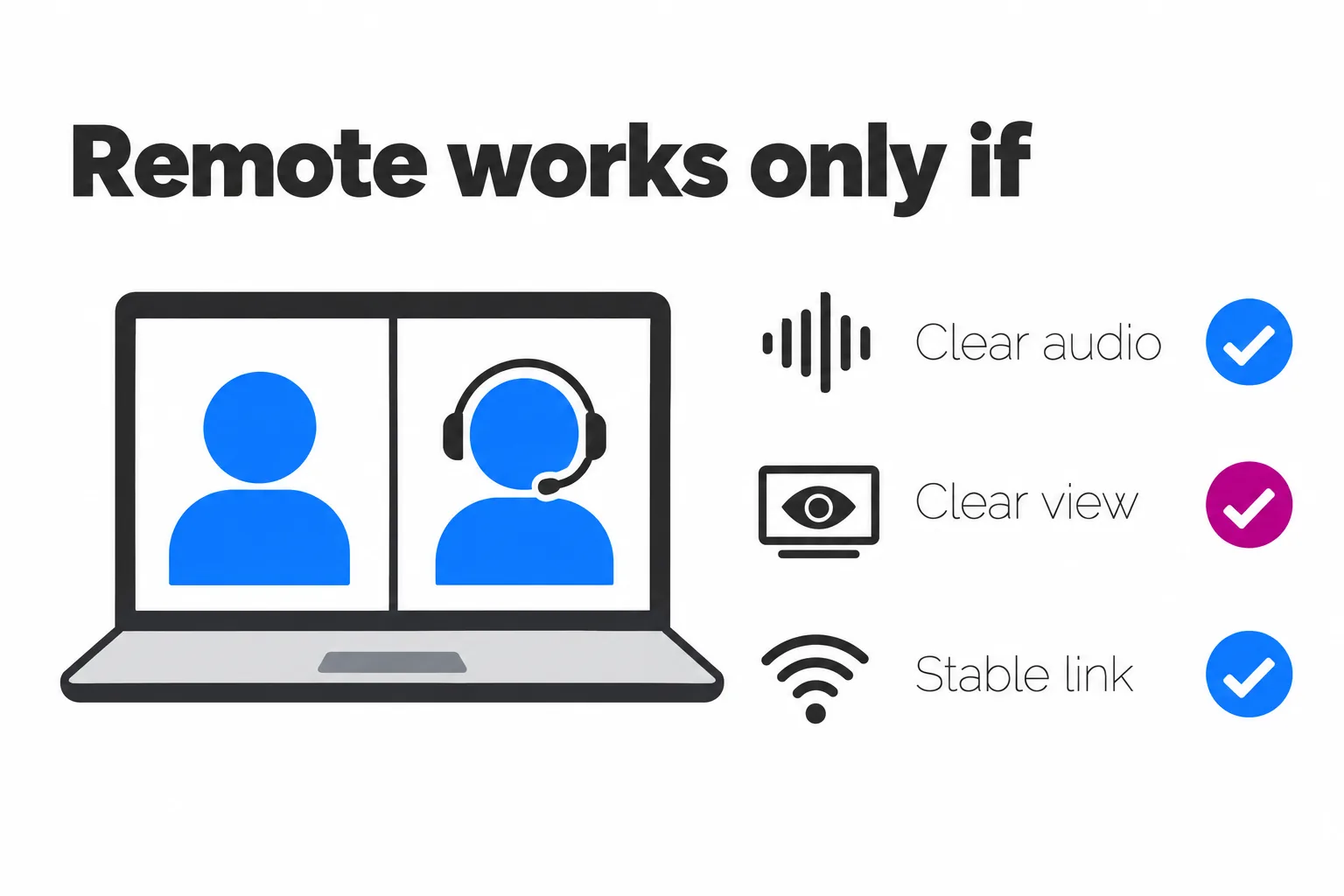
Sometimes. Spoken-language interpreting can be provided in person, by phone, or by video when the arrangement lets everyone communicate effectively. Sign-language video support also needs a clear view and suitable technology.
If the connection, screen position, or sound prevents understanding, tell the school immediately. A remote service is not adequate simply because an interpreter is connected.
For school teams, CCI’s phone, video, and on-site interpreting services offer options to discuss when planning parent communication. Confirm the language, meeting format, and availability.
Who Can (and Cannot) Interpret for Parents
Interpreters should be competent and trained. That means knowing education terms (IEP, accommodations, suspension) and keeping family information confidential.
A bilingual employee may be able to interpret if they have the necessary interpreting skills and subject knowledge. Conversational fluency alone does not establish those skills.
Ask the school to arrange appropriate assistance rather than treating your child as the default interpreter. Under the ADA, a public school cannot require a person with a disability to bring an interpreter. Reliance on a minor child is limited to an imminent-threat emergency when no interpreter is available. Accompanying adults are also subject to specific restrictions.
For spoken-language requests, ask who will interpret, how their competence is assessed, and how confidentiality will be handled. If a relative or friend is suggested, explain any concern about accuracy, privacy, or a conflict of interest.
Who Pays for School Interpreters?
Required school-provided assistance should be arranged and paid for by the responsible school or district. ADA rules expressly prohibit charging a person for required auxiliary aids and services.
Ask the school to confirm the arrangement before you book a private interpreter. Reimbursement for a provider you hire yourself is a separate question; do not assume it is automatic.
State Rules: Texas and Ohio
Federal requirements apply across states, but state rules and procedures can add detail. These are examples, not a complete state-law comparison.
| State | What the rule or guidance says |
|---|---|
| Texas | Special-education planning uses the Admission, Review and Dismissal (ARD) process. Texas Education Agency guidance says procedural safeguards must be provided in the parent’s native language or communication mode unless clearly not feasible, with oral or other explanation for a nonwritten language. Ask the ARD coordinator about meeting interpretation and documents. |
| Ohio | Ohio’s IEP parent-participation rule expressly requires necessary action for parents to understand the meeting, including arranging interpreters for parents with deafness or a native language other than English. |
Wherever you live, ask for your district’s language-access procedures, disability-access contact, and special-education safeguards as relevant.
How Parents Can Request an Interpreter
- Ask early. Contact the teacher, school office, or meeting coordinator. A written request creates a useful record; ask for help requesting if you need it.
- Describe the need. Give the language and dialect, or explain the communication aid you need. Include the meeting date, topic, and any documents you need explained.
- Request confirmation. Ask who will arrange the service and how it will be provided.
- Raise problems promptly. If support is missing or ineffective, explain that you cannot participate fully and ask how the school will correct the problem.
You can adapt this request:
I am the parent or guardian of \[student\]. I need \[language/dialect interpreter or communication aid\] for \[meeting\] on \[date\] so I can understand and participate. Please confirm the arrangement and tell me how I can receive the related information in a form I understand.
What If the School Refuses or the Interpreter Does Not Arrive?
Keep your request, the response, and notes about what happened. Contact the principal, district language-access contact, ADA/Section 504 coordinator, or special-education director, depending on the issue. Ask for the reason for a denial in writing.
You can ask to pause, reschedule, or reconvene a meeting when you cannot understand it. Do not assume that refusing to attend automatically stops school action or extends a legal deadline. Seek prompt help from a parent training center, advocate, or attorney if important decisions are involved.
Further options may include a state education complaint, an IDEA dispute-resolution process, or a civil-rights complaint to the appropriate agency. The correct route and deadline depend on the issue. Do not assume an internal school complaint extends an external filing deadline.
How Schools Can Plan Parent Communication
A practical district process should:
- Record parent language and communication preferences separately from student information.
- Assign responsibility for booking, confirming, and paying for required support.
- Allow preparation time for IEPs, disciplinary matters, and specialized terminology.
- Plan document access and backup arrangements for failed remote connections.
- Check whether parents understood the discussion and could ask questions.
CCI Group provides interpreting, document translation, and ASL and CART accessibility services. District staff can discuss school-family communication needs with CCI to confirm scope and availability. Families should direct access requests to their school or district first.